Strengthening Crisis Response for Juvenile Justice Across Ohio
Recent research from the Sentencing Project shows that incarceration of juvenile offenders does not reduce delinquent behavior, impedes education and future employment, and does lasting damage to health and well- being, among other negative outcomes.

Ruth Simera, M.Ed., LSW, is the executive director of the CJ CCoE at Northeast Ohio Medical University.
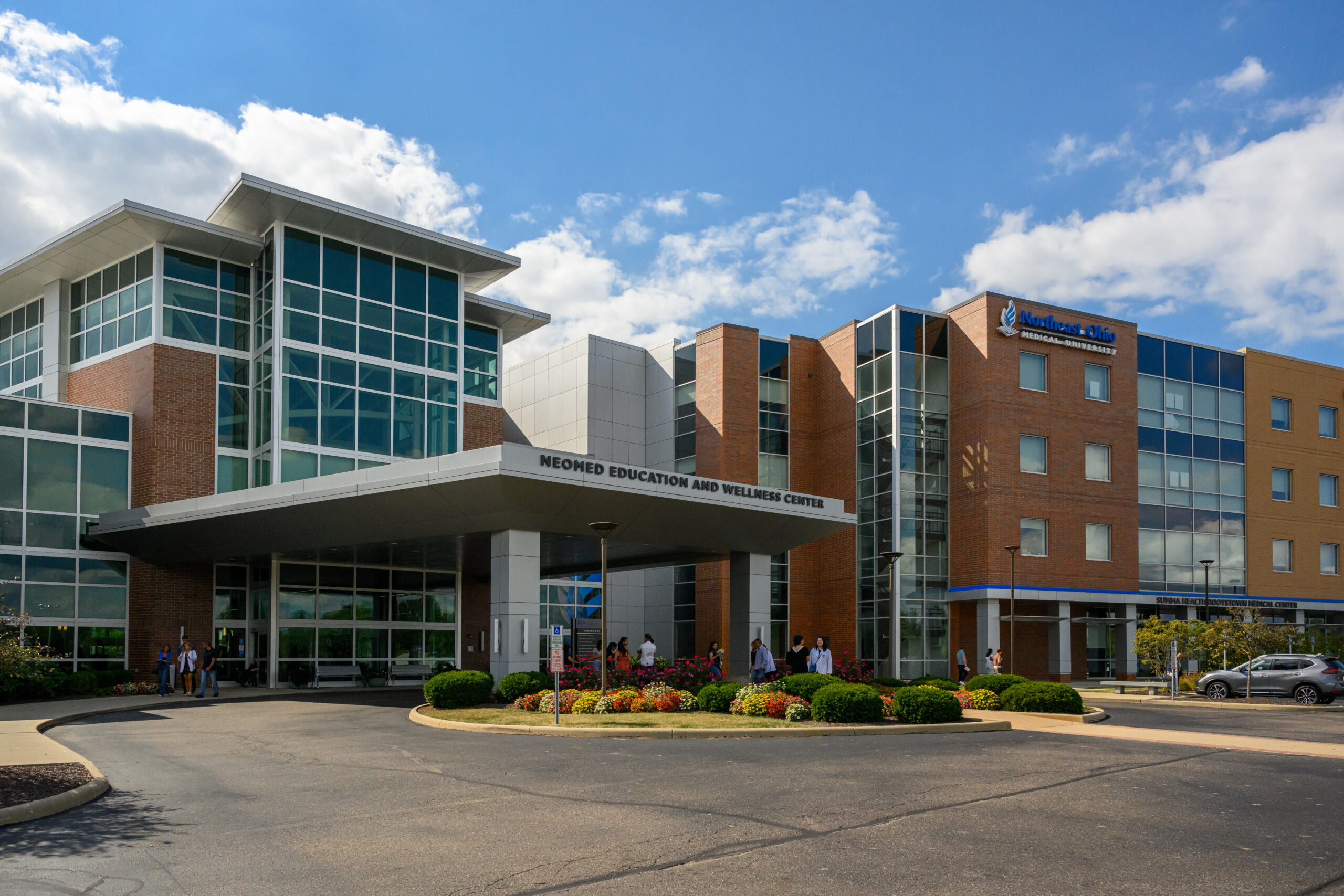
The Criminal Justice Coordinating Center of Excellence (CJ CCoE) at Northeast Ohio Medical University is working with communities across Ohio to strengthen crisis response systems to help young people before they enter the justice system.
Through hands-on facilitation, data gathering and analysis, and collaboration with local stakeholders, NEOMED staff are helping six counties—Franklin, Logan, Montgomery, Portage, Summit, and one to be determined—assess and enhance the services that support youth and their families experiencing behavioral health crises before, during and after justice contact.NEOMED’s expertise in this area is well established. The University has long been known for coordinating Crisis Intervention Teams (CIT) across all 88 Ohio counties, earning a reputation that led state officials to specifically request NEOMED’s leadership for a new effort funded by the Edward Byrne Justice Assistance Grant Program. The CJ CCoE received a non-competitive, three-year, $1.5 million grant from the Ohio Office of Criminal Justice Services to improve responses for juveniles involved in the justice system.
The Byrne State Crisis Intervention Program (Byrne SCIP) provides funds to help states strengthen crisis intervention initiatives, including programs designed to prevent violence, support individuals with behavioral health needs, and divert people from deeper involvement with the justice system. For the NEOMED CJ CCoE, the goal is not necessarily to add new services but to help communities determine which existing systems need to be bolstered, supported or better connected.
“With adults, significant housing needs exist in crisis intervention work, followed by transportation,” noted Ruth Simera, M.Ed., LSW, executive director of the CJ CCoE. “With juveniles, the challenges look different but the gaps can be just as significant.”
“With juveniles, the challenges look different but the gaps can be just as significant.”
— Ruth Simera, M.Ed., LSW, executive director of the CJ CCoE
A major component of NEOMED’s work involves Sequential Intercept Mapping (SIM), a collaborative, cross-systems planning tool that helps counties visually map how individuals with mental illness encounter both the behavioral health and criminal justice systems—from first contact through re-entry. NEOMED staff have facilitated workshops that span a day and a half and bring together 25 to 40 community stakeholders, including juvenile detention staff, behavioral health service providers, child protective services, schools, parents and youth, among others. Together, they examine how local services interact, where communication breaks down, and what opportunities exist to reduce unnecessary justice system involvement.Communities emerge from these workshops with four to five prioritized action items that become part of a “living, breathing” report compiled by NEOMED. Staff conduct periodic check-ins and provide ongoing support to help counties stay focused on their target populations and navigate challenges that arise.
Across Ohio, common themes have emerged. For juvenile systems, priorities often include building a stronger crisis response system; establishing both formal and informal respite options for families; developing re-entry plans that help youth transition safely back home and to school; and improving information sharing while maintaining compliance with privacy regulations.A remaining challenge exists when detention and child protective services are not appropriate, but the youth should not return home during the crisis. “There is a significant gap for these families who need assistance in that space,” said Simera.
Best practices continue to evolve, but three core components guide effective crisis care: a reliable place to call; someone who can respond; and somewhere to go. “The 988 Suicide and Crisis Lifeline has really strengthened the first element,” said Simera. “Mobile Response and Stabilization Services, or MRSS, is strengthening the second element. Many communities are supplementing that with co-response models pairing law enforcement with mental health professionals or trained peers, which can be adapted differently in rural and urban counties.”