



Eight Dimensions of Wellness
Supporting the whole NEOMED student The 8 dimensions of wellness
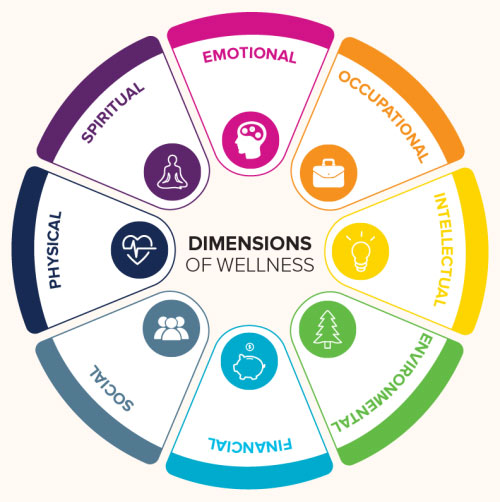 At NEOMED, we believe wellness is an important part of your success academically, personally, and professionally.
As students preparing for careers in the health professions, you spend a great deal of time caring for others. Taking care of yourself matters, too.
The 8 dimensions of wellness provide a way to think about your well-being as a whole. Each dimension is connected, and changes in one area can affect another.
You don’t have to have everything figured out. Wellness is a journey, not a destination.
You don’t have to do it all. Start with one area. Start with one small step.
You don't have to navigate professional school alone.
The Office of Student Services is here to support your academic and personal success through learning support and advising, leadership and involvement opportunities, social connections, student advocacy, and student wellness services.
Not sure where to start?
Start with Student Services.
We can help connect you with the right resource, person, or program.
- Location: R-132
- 330-325-6735

Explore the dimensions of wellness
 Professional school can bring significant academic, personal, and professional demands. Emotional wellness means recognizing how you’re feeling, developing healthy ways to manage stress, and knowing when to reach out for support.
Try this:
- Talk with someone you trust.
- Take a break when you feel overwhelmed.
- Practice mindfulness or relaxation techniques.
- Make time for activities you enjoy.
- Reach out for support when you need it.
- Take care of your mind and emotions.
- Recognize your feelings, manage stress, build resilience, and know when it’s time to ask for support.
Small step: Take a few minutes to breathe, unplug, or talk with someone you trust.
Understand your emotions. Manage stress. Ask for support.
 Intellectual wellness involves challenging yourself, developing new skills, asking questions, and finding ways to stay engaged and curious even when your academic workload feels overwhelming. It is about staying curious, challenging yourself, discovering new interests, and developing skills inside and outside the classroom.
Try this:
- Explore a new topic or hobby.
- Attend a campus event or presentation.
- Read something just for fun.
- Ask questions and seek different perspectives.
- Keep learning, growing, and exploring.
Small step: Learn something new just because you’re interested in it.
NEOMED Resources
 Physical wellness includes sleep, nutrition, movement, preventive healthcare, and making time to care for your body. As future healthcare professionals, developing healthy habits now can help you build a sustainable approach to your own well-being.
Try this:
- Get enough sleep and establish a consistent sleep routine.
- Find physical activities you enjoy.
- Eat regular, nourishing meals.
- Stay hydrated.
- Keep up with routine healthcare and preventive appointments.
- Give your body the care it deserves.
- Sleep, nutrition, movement, hydration, preventive healthcare, and rest all contribute to physical wellness.
Small step: Take a walk, drink some water, or give yourself permission to get some extra rest.
Campus resources:
 Social wellness is about relationships, connection, belonging, and having people you can turn to.
NEOMED is more than classrooms and exams. Your student organizations, campus events, service opportunities, and connections with classmates can help create a sense of community.
Try this:
- Attend a campus event.
- Join a student organization.
- Eat lunch with someone new.
- Check in with a classmate.
- Meet someone new on campus.
- Join a student organization or club.
- Make time for friends and family.
- Build relationships with people who support and encourage you.
- Build connections and find your community.
- Healthy relationships and a sense of belonging are important parts of wellness.
- Find people who support you, encourage you, and help you feel connected.
Small step: Say hello to someone new or attend a campus event.
Find your people. Build your community. Stay connected.
NEOMED resources:
 Financial wellness means understanding your financial situation, making informed decisions, managing expenses, and knowing where to turn when unexpected challenges arise.
Try this:
- Create a simple budget.
- Keep track of your spending.
- Take advantage of student discounts and campus resources.
- Learn about financial aid and available assistance.
- Set short- and long-term financial goals.
- Feel more confident about your finances.
- Understanding your money, managing expenses, and knowing where to find financial assistance can reduce stress and help you plan for the future.
Small step: Take a look at your spending and create a simple budget.
NEOMED resources:
- Financial Aid
- Scholarships & Grants
- Food & Basic Needs Support- Student Resource Pantry
- Pop Up Pantry, Akron Canton Food Bank (the fourth Monday of the month, noon to 2 p.m.)
 Environmental wellness involves creating spaces that help you feel comfortable, safe, focused, and supported. It can also mean connecting with nature and taking care of the environment around you.
Try this:
- Keep your living and study spaces organized.
- Spend time outdoors.
- Find a quiet place when you need to recharge.
- Reduce waste and recycle when possible.
- Explore the natural spaces around campus.
- Create spaces where you can thrive.
- Your surroundings can affect how you feel, think, and function.
Small step: Step outside, organize your study space, or spend a few minutes in nature.
NEOMED resources:
- Campus green spaces
- Pray and Meditation Room – R150
- Outdoor recreation
- Sequioa
- Student lounges:
- Purple Star Military Lounge
- Game Room-A123
- Cultural Commons- A103
- Liebelt Lounge
 For NEOMED students, occupational wellness can mean finding purpose in your chosen profession, developing professional skills, preparing for your future career, personal life and maintaining balance along the way.
Try this:
- Explore career opportunities and interests.
- Connect with career services.
- Set realistic academic and professional goals.
- Develop skills that will support your future career.
- Make time for rest and activities outside of school.
Small step: Set one achievable goal today that helps you feel more balanced, productive, or fulfilled in your work or studies
NEOMED resources:
 Spiritual wellness does not have to be connected to a particular religion. It can involve understanding your values, finding purpose, practicing gratitude, connecting with nature, or exploring questions about meaning and belonging.
Try this:
- Spend time reflecting on your values and goals.
- Practice gratitude.
- Spend time in nature.
- Make time for quiet reflection or meditation.
- Connect with a community that shares your values.
- Spiritual Wellness
- Connect with your values, purpose, and what matters to you.
- Spiritual wellness can involve faith, reflection, personal values, gratitude, purpose, or simply taking time to understand what gives your life meaning.
Small step: Take a quiet moment to reflect on what matters most to you.
NEOMED resources:
- Spiritual & Faith-Based Organizations
- Nature & quiet spaces
- Prayer & Meditation Room- R150
- Student organizations & communities
- Campus Events
- Wellness programs
Your wellness matters!
Your wellness journey
There is no perfect definition of wellness and everyone’s wellness journey looks different.
Check in with yourself.
Take care of yourself.
Ask for help when you need it.
Celebrate the small wins.
You belong here.
You matter.
Your well-being matters.
Wellness is connected
One area can affect another:
- Feeling stressed can affect your sleep.
- Financial concerns can affect your emotional well-being.
- Feeling disconnected can affect your motivation.
- A busy academic schedule can make it difficult to make time for yourself.
That’s why we look at wellness as a whole.
- You don’t have to improve all eight dimensions at once.
Start with one.
What's one small step you can take?
You don’t need to make a major change. Choose one small action:
Take a break
Visit the Meditation Room or find a quiet space to reset.
Connect
Reach out to a classmate, friend, faculty member, or Student Services.
Move
Take a walk or spend a few minutes moving between study sessions.
Rest
Give yourself permission to prioritize sleep and recovery.
Get support
Connect with academic resources or the Learning Center.
Ask for help
Talk with Financial Aid about financial questions or concerns.
Talk to someone
Connect with Counseling Services or another trusted support.
Get involved
Find a student organization, campus event, leadership opportunity, or service activity.