15%
American adults (37.5 million) who report some trouble with hearing.

The Hearing Research Group is one of the leading Auditory Neuroscience groups in the United States, with ten laboratories studying auditory processing.
The Hearing Research Group is one of the leading Auditory Neuroscience groups in the United States, with six laboratories studying auditory processing.
Our group seeks to deepen the understanding of how the ear and the brain function in association with hearing and communication across the lifespan, how they are affected by hearing disorders, and how they may be manipulated to prevent or treat these disorders.
NEOMED researchers study several hearing & communication health issues:
Katelyn shares her story of living with hearing loss and the importance of research on causes, prevention and treatment of hearing disorders.
We strive to deepen the understanding of how the ear and the brain function in association with hearing and communication across the lifespan, how they are affected by hearing disorders, and how they may be manipulated to prevent or treat these disorders.
American adults (37.5 million) who report some trouble with hearing.
Nearly 1 in 12 U.S. children ages 3-17 have had a disorder related to voice, speech, language or swallowing in the past 12 months.
Americans who experience some form of tinnitus (ringing in the ears).
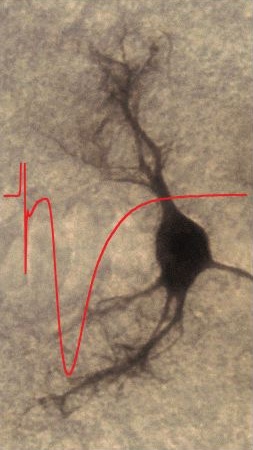
Cellular and molecular mechanisms underlying neuromodulation by metabotropic glutamate receptors in sound localization circuits.
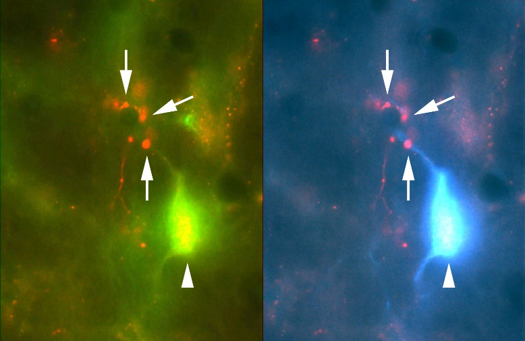
We discovered circuits (red fibers contacting the blue and green nerve cell) that may allow us to tune in to sounds that are interesting and tune out sounds that are distracting. Dysfunction in these circuits may relate to the difficulties in hearing that often accompany aging.
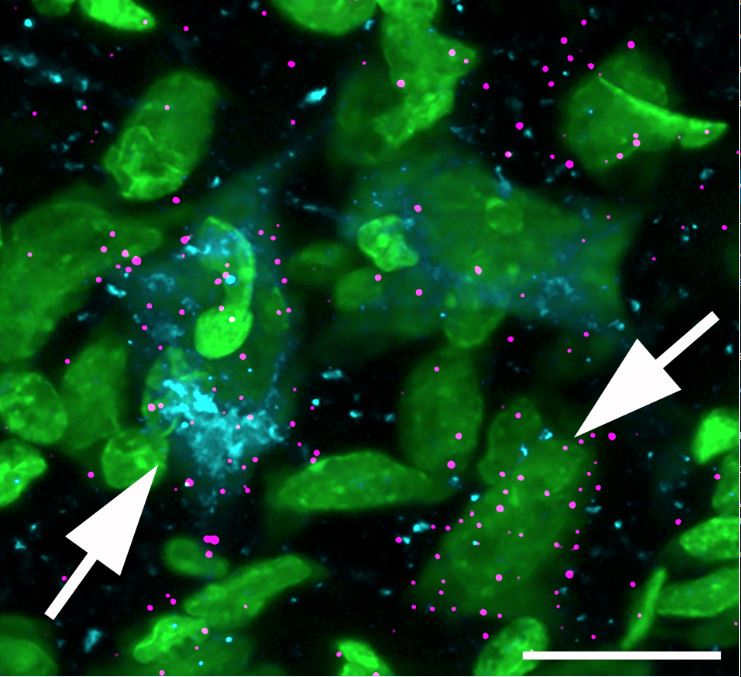
We discovered that auditory midbrain cells (arrows) heavily upregulate specific receptors (magenta) during middle-age and the subsequently downregulate the receptor during old age. The loss of these receptors in old age may underlie aspects of age-related hearing loss
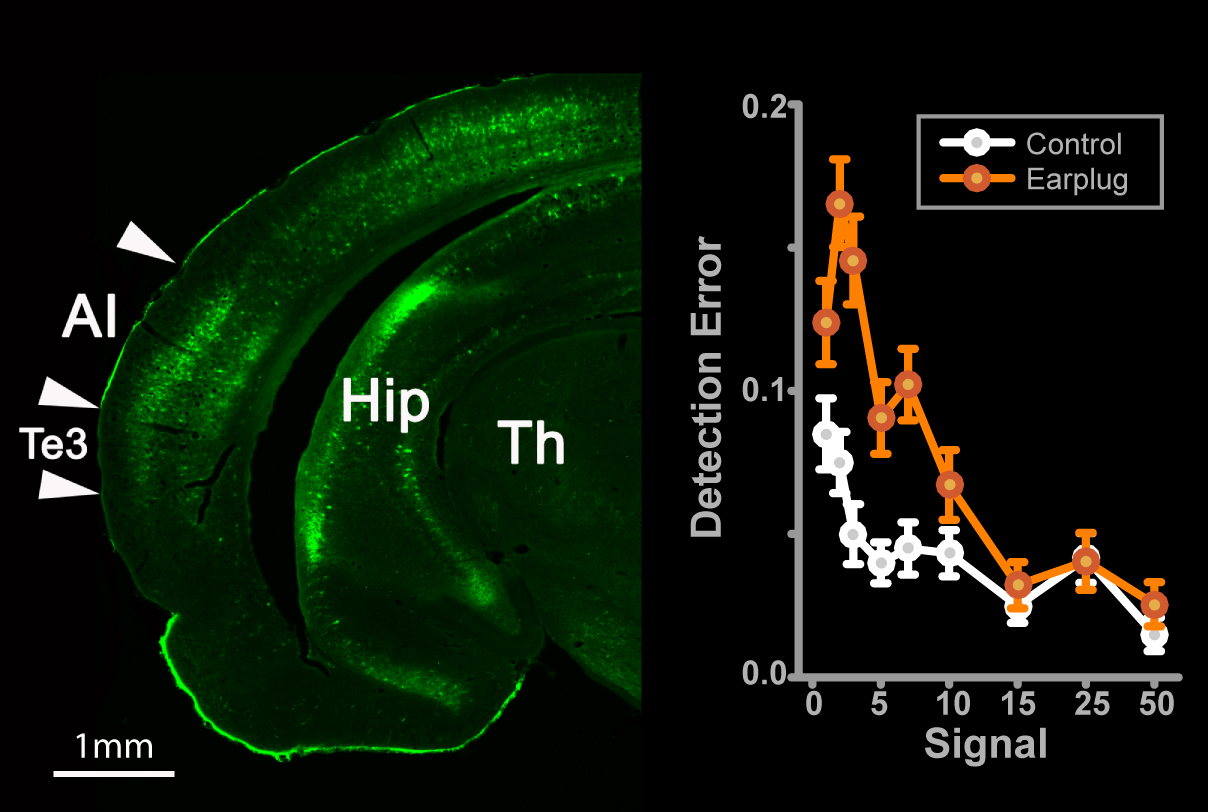
Early childhood hearing loss can result in long-lasting problems with speech perception. We discovered a novel method of remediating perceptual problems that also improved neural sensitivity in the auditory cortex.
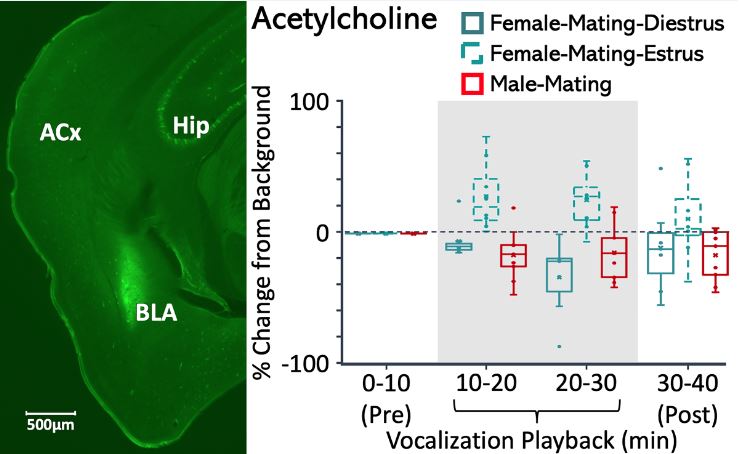
In response to emotional vocalizations, the basolateral amygdala releases acetylcholine and dopamine in patterns that vary by context and estrous stage. Studies using microdialysis and LC/MS chemical detection suggest these patterns underlie how the amygdala processes social vocalizations in different contexts.
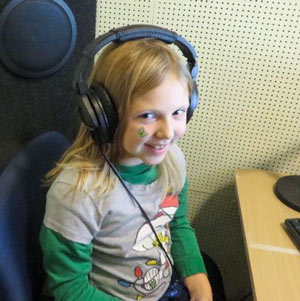
We study why performance on basic auditory and speech perception tasks changes during adolescence in people with normal hearing. This work will inform experimental protocols for diagnostic tests and rehabilitation strategies for auditory processing disorders in adolescents and young adults.
Neural mechanisms underlying tinnitus, and potential therapies

Mechanisms of neurotransmission underlying auditory processing
Auditory perception and learning during adolescence
Age-related circuit changes that occur before hearing loss
Effects of stress and hearing loss on auditory perception and neural circuits
Neuroanatomical and neurochemical analysis of auditory circuitry
Neural circuits underlying emotional vocal communication
Cellular properties of neurons that support sound localization