


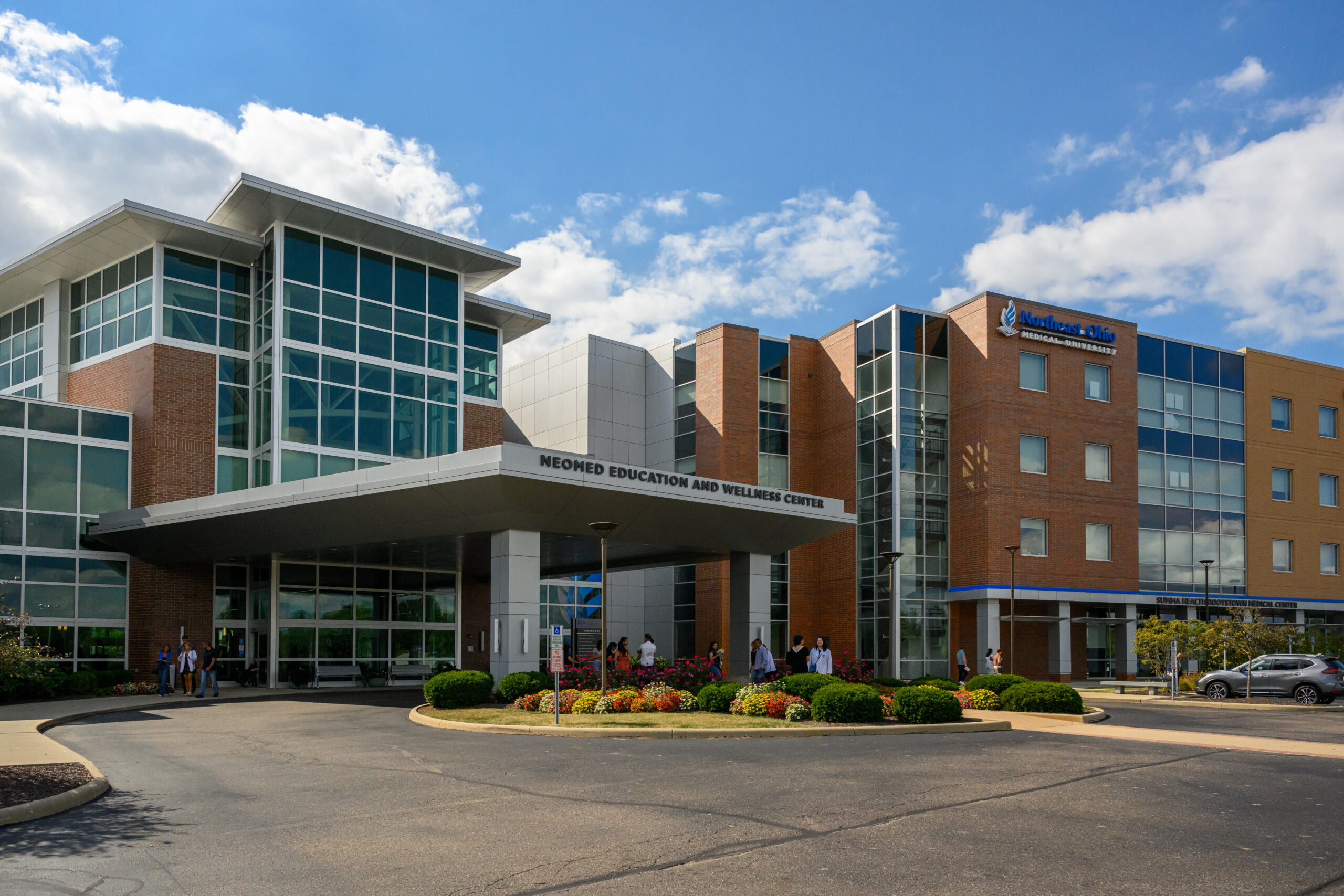
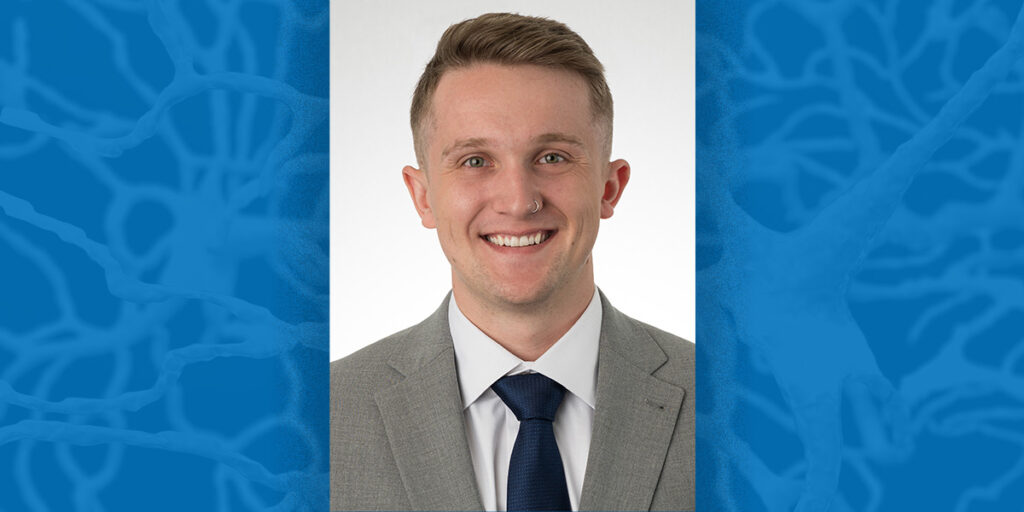
Second-year medical student Isaiah Kongsvik was one of more than 200 NEOMED students to present their scholarly work at the 2025 Student Research Symposium. Kongsvik shared with The Pulse the inspiration for his work, what he learned and next steps for his research, titled “The effects of traumatic brain injury on non-visual retinal pathways.”
What was the inspiration for the project? What led you to the topic?
The project was started by Andrew Fulk as part of his Ph.D. work, and the original concept is his. His research focuses on how TBI [traumatic brain injury] affects these retinal pathways.
I became interested because intrinsic, photosensitive retinal ganglion cells (ipRGCs) are known to regulate circadian rhythms by responding to light and projecting to visual brain regions. Clinically, individuals who have TBI frequently experience sleep disturbances and disruption of their circadian rhythms. The connection with visual systems made it compelling for me to study.
In addition, our lab, through Dr. Matthew Smith, has interest in identifying neuroprotective compounds that could mitigate the neuronal degeneration that follows TBI.
Briefly describe the work. What are some key findings?
Using controlled cortical impact animal models for TBI, we evaluated the structural and functional changes in the non-image-forming retinal pathways. We performed immunohistochemistry and 3D neuronal reconstruction to assess the morphology of ipRGCs. We also did in vivo electrophysiology, which included visual evoked potentials (VEP) and photopic negative response (PhNR) to assess the downstream signaling that the retina was receiving.
Our key findings showed that there was reduced dendritic field size and branching complexity in ipRGCs following a TBI, that there is evidence of neuroinflammation at ipRGC projection sites, and that there were changes in VEP and PhNR responses, indicating disrupted signaling in the pathways.
What is the potential impact of the research?
These findings help provide a link between brain injury and circadian disfunction. Specifically, disruption in these cells could contribute to the sleep disturbances seen in TBI patients.
From a clinical standpoint, it can improve understanding of post-TBI disturbances in sleep, support the use of retinal electrophysiology as a potential injury biomarker, and help development of neuroprotective strategies for preventing neurodegeneration post-TBI.
Do you have plans to continue participating in research? What are your career goals?
Yes, I plan to continue participating in research, although I would like to shift more towards clinical research. Right now, I am most interested in pursuing ophthalmology as a specialty, and I am particularly interested in glaucoma, cataracts or neuro-ophthalmology.