


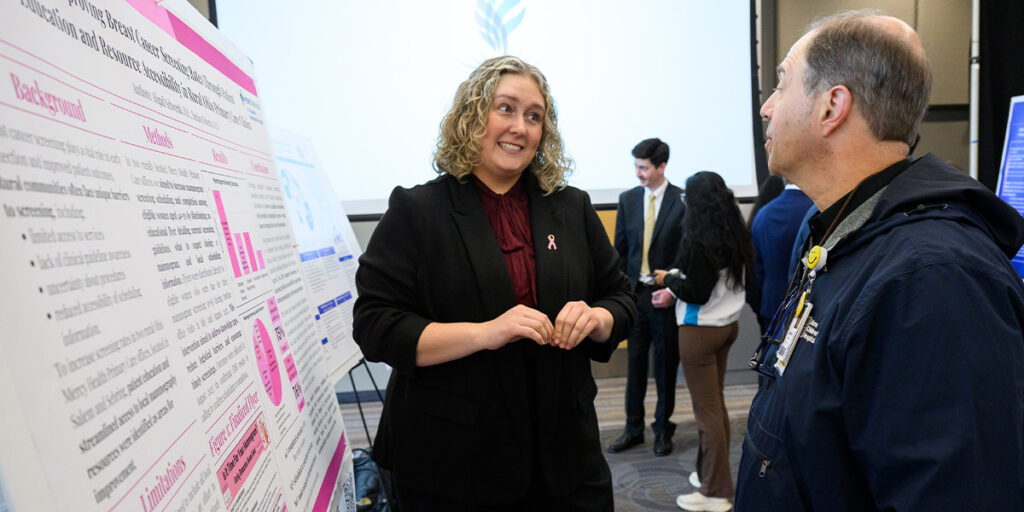
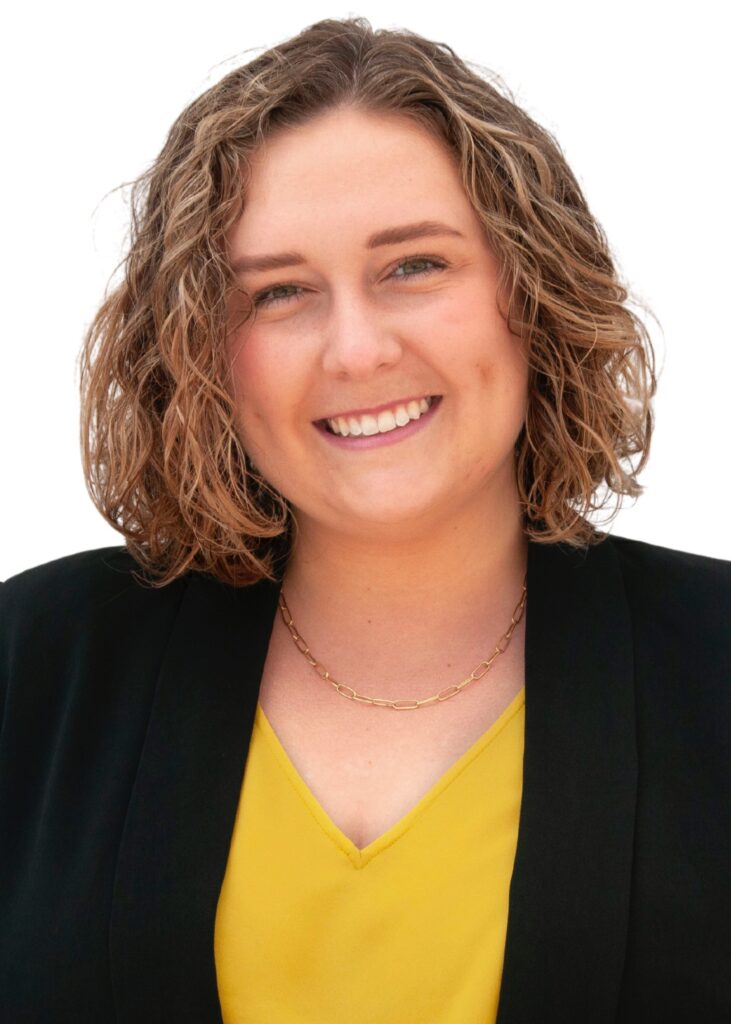
Second-year medical student Abigail Schwenk was one of more than 200 NEOMED students to present their scholarly work at the 2025 Student Research Symposium. Schwenk shared with The Pulse the inspiration for her work, titled “Improving breast cancer screen rates through patient education and resource accessibility in rural Ohio primary care clinics,” what she learned and next steps for her career.
 What was your inspiration for the project? What led you to this topic?
Last summer, I participated in the Leroy A. Rodgers, M.D., Family Medicine Preceptorship Program, which gave me the opportunity to work closely with Dr. Darian Roberts, a NEOMED alum [M.D., ’18], over the course of four weeks. During this time, I assisted with clinic visits and gained meaningful exposure to the scope of family medicine practice. As part of the preceptorship, we were asked to complete a quality improvement project, which encouraged me to reflect more intentionally on patterns I was observing in clinic.
Throughout those four weeks, many patients expressed uncertainty about current mammogram screening guidelines, what the procedure involved, and how to schedule appointments across different local screening locations, each of which had its own scheduling process as they were each under different hospital systems. I also noticed that when discussing mammogram screening with patients, information about the most local and accessible screening options under other hospital systems, including one which offered walk-ins, were not clearly posted anywhere in the office for patient awareness. In rural settings, these challenges are often compounded by distance, limited appointment availability, and fewer screening resources overall. These observations motivated me to design a simple, patient-centered intervention that could be integrated into routine office visits to help bridge the gap between identifying an overdue screening and actually completing it, while also addressing common questions and concerns patients have about mammograms.
What were the main findings you presented?
The project showed that a low-cost educational flyer, when provided directly to eligible patients during office visits, was associated with meaningful improvements in mammogram scheduling and completion within a small sample size. Of the nine women who received the flyer, the majority either completed or scheduled their screening within the project period (July – August 2025), with 44% completing screening within the project window and 67% scheduling or completing screening overall. At the practice level, the provider’s overall mammogram screening rate also increased during the intervention window, from 75% in June 2025 to 76% in August 2025.
The project also highlighted important limitations, such as capacity constraints in the hospital system’s Mammography Van, which visits each clinic location only once per month for 2-3 hours and was booking out to October by mid-August, as well as a health systems restriction that prevented listing highly accessible, local screening sites with walk-in availability under a different hospital system on the flyer, potentially contributing to delays in seeking preventative care. These capacity challenges, combined with geographic and system-level barriers, may limit the overall impact of interventions aimed at reducing barriers to care, highlighting the ongoing need for expanded, accessible mammography and imaging resources in rural Ohio.
How will this project improve health?
While limited by a small sample size and local screening capacity, this project demonstrates how targeted patient education paired with practical scheduling information can serve as a low-cost, scalable approach to improving breast cancer screening rates in rural primary care settings. By increasing patient understanding of screening guidelines, clarifying what to expect during a mammogram and simplifying the scheduling process, the intervention supported earlier and more timely screening, which is an essential factor in improving breast cancer outcomes. Importantly, the project also highlighted how system-level constraints, such as limitations on sharing information across health systems, can affect patients’ ability to navigate care. These findings emphasize the importance of stronger collaboration and partnership across community health systems, especially in rural settings, to ensure patients have comprehensive information about available resources. Insights from this project can inform future quality improvement efforts that leverage community partnerships to increase screening accessibility, reduce delays in care, and ultimately improve screening rates and outcomes for patients in rural areas.
Is this an area you plan to work on in the future? Do you see yourself in women’s health or rural health?
I am very much interested in family medicine, specifically in rural community medicine and women’s health. This project really reinforced my desire to work in rural settings, where family physicians often play a key role not only in providing care, but also in helping patients navigate limited local resources. Women’s health is an especially important aspect of primary care to me, as preventive services such as breast cancer screening have a profound impact on long-term outcomes and rely on trust, continuity and patient-centered communication. In the future, I hope to practice full-scope family medicine in a rural community where I can build community partnerships to continue quality improvement work and advocacy efforts focused on improving access to preventive and women’s health services.