


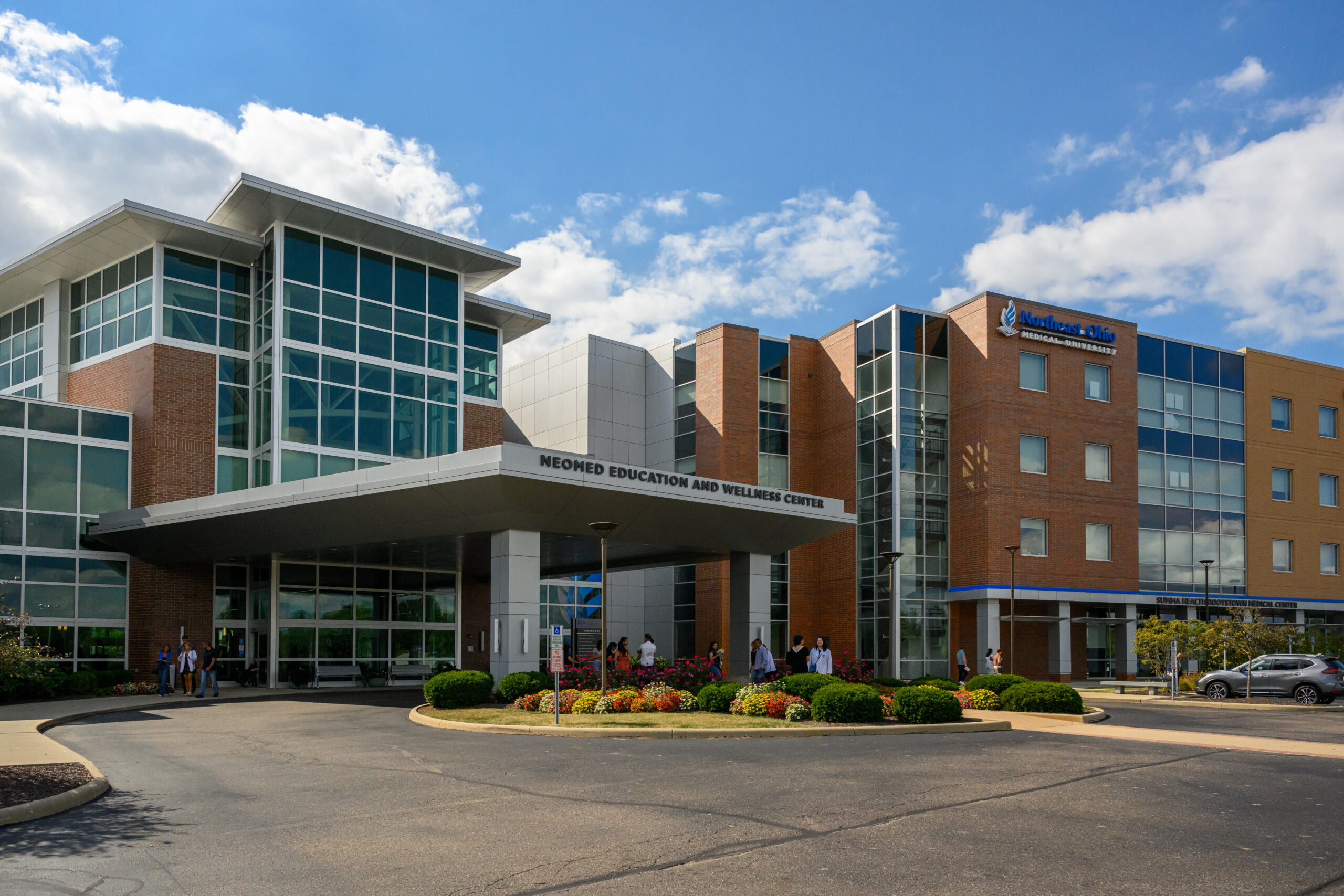
Physician Leadership (Winter 2025)
Physician leadership
Training the next generation of medical professionals
When Northeast Ohio Medical University was created in 1973 as a school of medicine, the mission was to address a severe shortage of primary care physicians practicing in the state.
Though filling positions in primary care remains an important part of NEOMED’s mission, Marc Basson, M.D., Ph.D., M.B.A., dean of the College of Medicine, noted that projections suggest that by 2035, the U.S. might meet or even exceed the demand for primary care physicians.
“We do have a continuing and growing deficit in specialty physicians,” Dr. Basson noted.
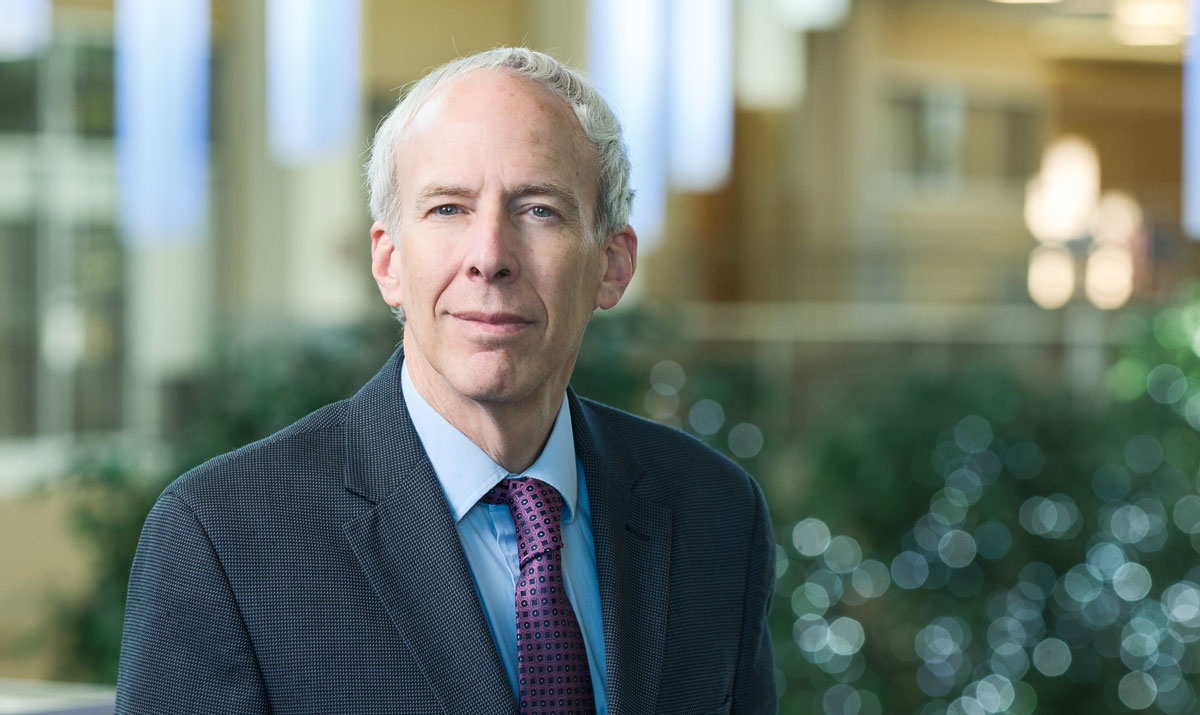
Marc Basson, M.D., Ph.D., M.B.A., dean of the College of Medicine.
The Geography of Workforce Gaps
National statistics often mask disparities in health care access. Large urban centers may boast sufficient specialists and primary care physicians, while rural and underserved urban areas, such as parts of Appalachia or inner-city regions, face severe shortages.
More than half of Ohio’s 88 counties remain wholly or partly designated Health Professional Shortage Areas (HPSA) — 42 and 14, respectively — for primary care physicians by the Health Resources and Services Administration. Many of those HPSA counties are in rural Appalachia.
In a free-market system, attracting health care workers to these underserved areas poses a challenge. Dr. Basson argued that educational institutions play a pivotal role in addressing these disparities.
“We don’t admit anybody in medical school that doesn’t belong here,” Dr. Basson stressed, while noting the NEOMED’s focus on recruiting students who are likely to fill gaps in the workforce and serve in underserved areas. For instance, he said, “Rural students tend to end up in rural places because they grew up there; they may like it there.”
Similarly, first-generation and economically disadvantaged students bring valuable perspectives that enrich the health care landscape.
By recruiting and training students from rural or underserved regions and encouraging them to remain in these areas post-graduation, NEOMED can better align workforce distribution with local needs.
For instance, NEOMED has implemented strategies to ensure its graduates stay in Ohio. Over 55% of 2024 College of Medicine graduates pursued residencies in Ohio, and many remain to practice in the state, reflecting the importance of aligning educational goals with community needs.
Over 55% of 2024 College of Medicine graduates pursued residencies in Ohio
Shift in Need
Part of the reason for the statistical shift for primary care physicians is the growing roles of nurse practitioners (NPs) and physician assistants (PAs), who are increasingly addressing primary care needs.
Dr. Basson emphasized the importance of a team-based model where all providers operate at the top of their licenses and have access to experts for consultation. This collaborative approach ensures optimal care while recognizing the value each role brings.
“We talk about NPs and PAs. It’s also clear that pharmacists are meeting health care needs, especially in rural communities or in underserved areas in general,” he noted. “They’re not doing primary care, but they’re able to counsel people and help them get their meds and provide vaccinations and talk to them, because there isn’t enough primary care available to do it in those areas.”
Preparing Future Physicians for Emerging Challenges
Health care is not static, and the demands on physicians are changing. Beyond clinical expertise, doctors must adapt to new technologies, particularly artificial intelligence (AI), which is revolutionizing medicine.
To illustrate, Dr. Basson shared a technological shift from early in his career.
“I think about the introduction of laparoscopic surgery, because that was a game changer,” he said. “When I was in residency, there were some gynecologists who did it, but no general surgeon would ever pick up a laparoscope. Then after I finished my residency, I did my Ph.D., so I moved away from clinical work for a few years. By the time I came back, everybody was doing laparoscopy. But I remember when people first started talking about it, we thought this was a terrible idea. It seemed horribly risky. Now, laparoscopic robotic surgeries are mainstream.”
AI already assists with administrative tasks, such as transcription and information retrieval. Future applications might include clinical decision making, real-time diagnostics and even treatment recommendations.
“Critical thinking is more important, rather than less important, in the era of AI and the era of the internet,” Dr. Basson contended. “I think this is something we have to wrestle with. Where is the role of the human being going to be in all this, as AI becomes more powerful? I think it’s important for our students to really double down on their critical thinking skills, to understand how to use AI as a tool rather than a crutch.”
Balancing Compassion and Technology
The essence of medicine lies in human connection. Dr. Basson emphasized that while technology enhances efficiency, it cannot replace the trust and reassurance provided by a compassionate physician.
“What will it mean to be a doctor in 15 years? I hope that our students will still be kind, compassionate people who listen, communicate, take patients seriously, meet them where they live in terms of their culture,” he said.
The constantly shifting health care landscape poses challenges for physicians-in-training.
“I think that the biggest challenge our students will face is to understand and adapt to all this advanced technology, whether it’s the technology of today, or whether it’s the technology of the near future,” Dr. Basson said. “At the same time, they need to remain compassionate human beings who can provide the other half of what doctors need to provide. We’re not just writing prescriptions or doing procedures. We’re being there for our patients. And that’s something that we have to remember, and we have to champion.
“We’re not just training physicians; we’re training physician leaders.”
“We’re not just training physicians; we’re training physician leaders.”
— Dean Marc Basson
Training Physician Leaders
NEOMED exemplifies how medical schools can cultivate leadership qualities in students. Leadership is embedded in the curriculum, particularly during the fourth-year capstone course. Beyond formal education, students are encouraged to assume leadership roles on College committees and in student groups.
These opportunities allow students to practice leadership skills in real-world contexts, preparing them to navigate the complexities of modern health care.
“Like it or not, physicians are going to be leaders, and you can lead well and use your influence well, or you can lead badly and use your influence poorly,” Dr. Basson noted. “A lot of times when people hear ‘physician leaders’ they think of the president of a hospital system. It certainly can encompass being the CEO of a hospital, being the dean of the medical school, being the chair of the department. But, medicine’s a team sport. That makes it all the more important that you have leadership skills, so that you can meld the team. And that’s very obviously true in a surgical unit or but it’s also true in a primary care clinic. It’s true every place where we take care of patients.”
NEOMED recently increased efforts to recruit military-affiliated students, underscoring a commitment to fostering leadership.
“Students who have a history in the military have experienced leadership, have probably had some training and some affinity for that in many ways that we think will help them mature as leaders further in the medical field,” Dr. Basson said.
The Road Ahead
Leadership, compassion and adaptability will define the next generation of physicians. By fostering these qualities, medical schools like NEOMED are not only meeting current challenges but also shaping the future of health care.