


Breaking New Ground in Allergy and Immunology
Breaking New Ground in Allergy and Immunology
Alumna Sandra Hong’s journey and vision

Sandra Hong, M.D. (’97), M.B.A
When it comes to advancing the field of allergy and immunology, Sandra Hong, M.D., M.B.A, has made a significant impact. Her career has been one of dedication, innovation and transformative care. As chair of the Department of Allergy and Clinical Immunology and medical director of the Food Allergy Center of Excellence (FACE) for the Cleveland Clinic, Dr. Hong has made many contributions to her field and is redefining the standard of care for patients with food allergies. In a conversation with Ignite, she shared insights into her journey, the challenges patients and their families face and the groundbreaking work being done under her leadership.
A Leader in Allergy and Immunology
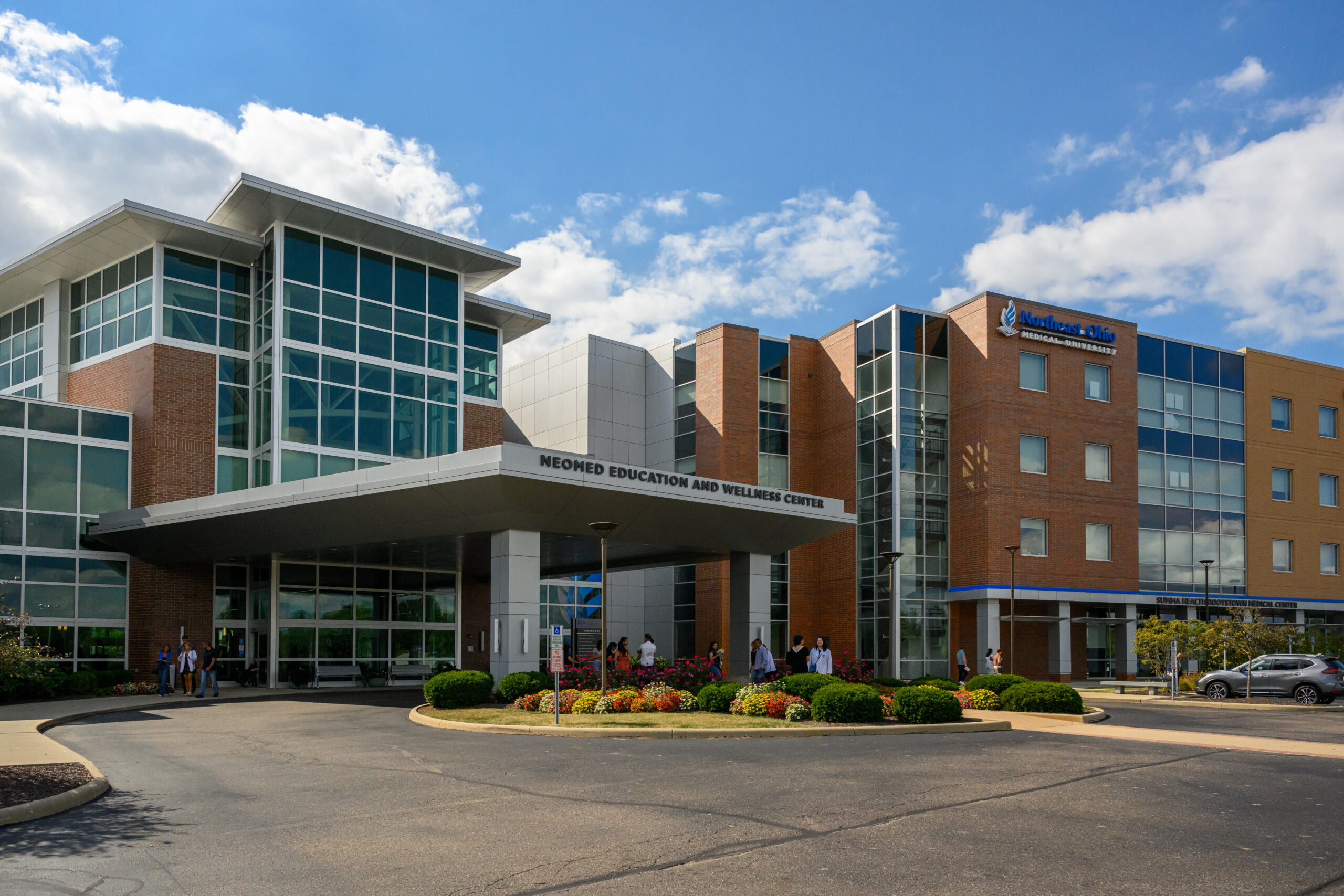
Dr. Hong joined Cleveland Clinic in 2005, bringing her experience and passion for patient-centered care, establishing her as an integral part of the institution. After years of impactful work, she assumed the role of chair of the Department of Allergy and Clinical Immunology in 2022 — a milestone she describes as “an honor that definitely changed [her] life a bit.” Reflecting on her path to leadership, she candidly admitted that becoming department chair was not part of her original plan when she graduated from NEOMED’s College of Medicine in 1997. However, her extensive leadership experience, including her four years as a regional medical director for Cleveland Clinic’s family health centers, made her a natural fit for the role.
Among her most notable achievements is the establishment of the FACE in 2020, which has become a beacon for patients seeking holistic and transformative care. Despite launching just as the COVID-19 pandemic began, the center has become a pioneering institution in food allergy treatment expanding to three locations in the northeast Ohio area.
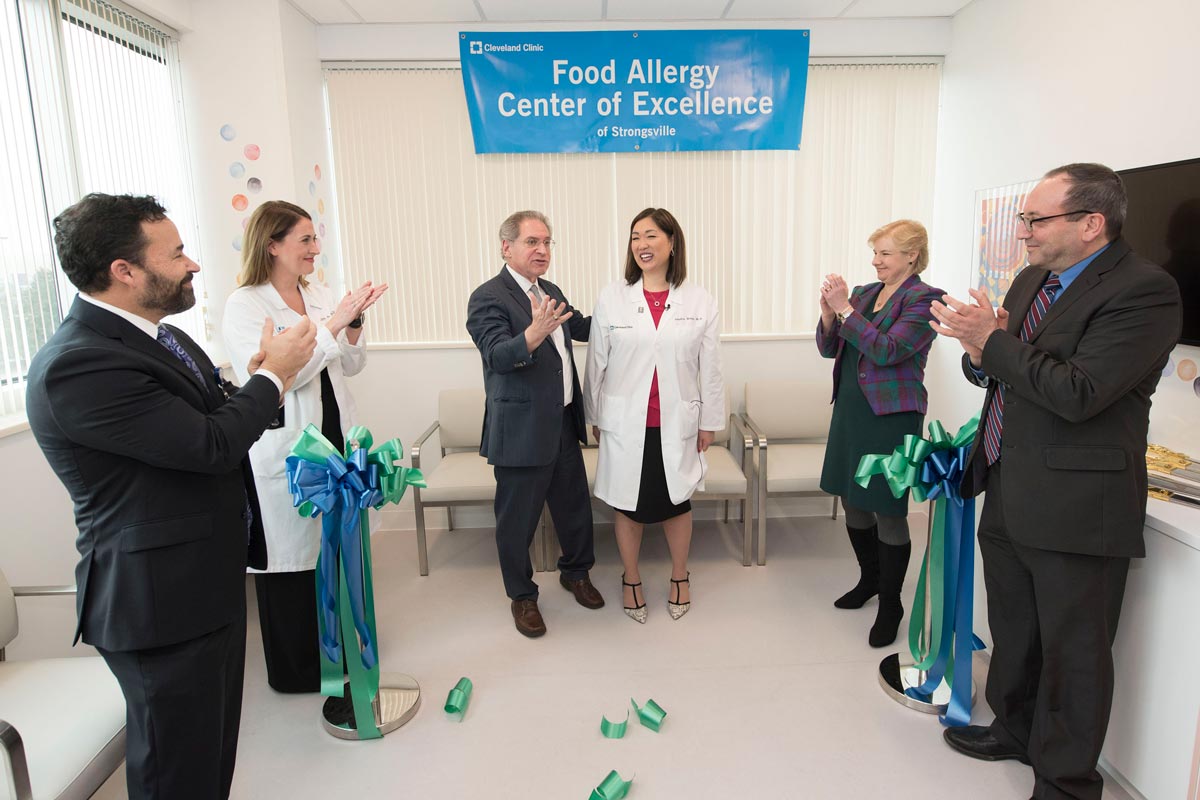
Sandra Hong, M.D., celebrated the opening of multiple food allergy centers, including those at Hillcrest Hospital and the Strongsville Family Health and Surgery Center. Photo courtesy of Cleveland Clinic.
The Food Allergy Center of Excellence stands out for its holistic, multidisciplinary approach. As Dr. Hong explained, “We wanted to create a center where patients could receive holistic care, so we made sure that we had registered dietitians and pediatric psychologists who specialize in food allergies to support both the patients and their families.” This approach addresses not just the physical aspects of food allergies but also the emotional and psychological challenges that patients and their loved ones face.
Over the years, there has been a noticeable increase in food allergies among children. According to the Centers for Disease Control and Prevention (CDC), 8% of children are affected by food allergies; roughly one in 13 children. One startling statistic highlights the importance of this comprehensive care: studies have shown that children with multiple food allergies have a 50% chance of being bullied. Dr. Hong emphasized the broader implications of food allergies, noting, “Having food allergies really increases anxiety, depression and isolation.” Addressing the psychological toll of food allergies is a critical component of Dr. Hong’s work. This is why the FACE team works diligently to support families on all levels beyond managing dietary restrictions.
“Patients that were at high risk for developing food allergies were asked to avoid foods. We’re learning that avoidance is actually the opposite of what we’d like to do,” Dr. Hong noted, explaining how the FACE treatment plan differs from some other medical practices.
A hallmark of FACE is its focus on oral immunotherapy (OIT), a treatment that may offer hope to families managing life-threatening food allergies. OIT works by gradually introducing small amounts of allergens into a patient’s diet to build tolerance.
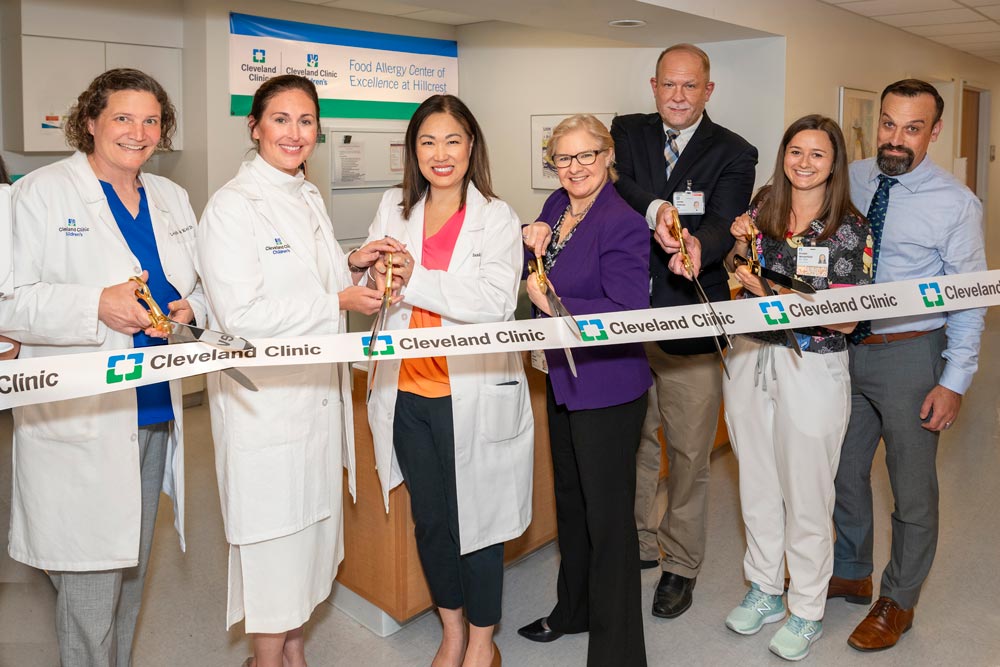
Sandra Hong, M.D., celebrated the opening of multiple food allergy centers, including those at Hillcrest Hospital and the Strongsville Family Health and Surgery Center. Photo courtesy of Cleveland Clinic.
This early intervention offers a life-changing shift, enabling patients to safely consume foods that once posed severe risks.
While OIT has been recognized as an alternative to food avoidance in treating food allergies, further research is needed to determine the long-term efficacy and safety of OIT with different populations of patients before it can be widely available. With access to specialized OIT treatment being limited, families often travel from the tri-state area and beyond to Cleveland Clinic for OIT, underscoring the need for such services.
A Passion for Medicine and Leadership
Dr. Hong’s journey into medicine was inspired by her mother, who encouraged her to pursue a career in health care. Her mother’s guidance led both Dr. Hong and her sister, Susan Hong, M.D. (’95), to pursue medical careers. Both attended NEOMED and now work at the Cleveland Clinic. Dr. Sandra Hong completed the six-year B.S./M.D. program at NEOMED in 1997, followed by allergy and immunology specialty training through a fellowship at Massachusetts General Hospital/Harvard Medical School in Boston.
“One of my core values has been to help others,” she shared. “We are able to improve quality of life, and I love being a part of my patients’ lives.”
Dr. Hong’s passion for her field is evident not only in her clinical work but also in her commitment to leadership. When asked about her leadership style, she described herself as a servant leader.
Her dedication extends beyond her immediate team. Dr. Hong has also contributed to addressing burnout among physicians while providing meaningful opportunities for aspiring medical students. A prime example of this is her role as the enterprise lead for four educational scribe programs at the Cleveland Clinic. This initiative allows post-baccalaureate students to train and gain firsthand experience in medicine while providing support to physicians. The program has a 90% acceptance rate to medical school, and many of these students return to work at Cleveland Clinic for a year after completing their studies.
Looking Ahead
The future of allergy and immunology is evolving, with advances in biological medications and immunologic therapies reshaping the field. Dr. Hong remains optimistic about the potential for OIT to become a standard treatment, emphasizing the need for continued research.
For aspiring physician leaders, Dr. Hong offered this advice: “When you’re uncomfortable, you’re growing.” She also emphasized the importance of collaboration and staying true to one’s core values.
Dr. Hong’s work and compassionate leadership exemplify the transformative power of medicine. Through her efforts, the Cleveland Clinic’s Food Allergy Center of Excellence is working to set a new standard for care, offering hope to families navigating the challenges of food allergies.