


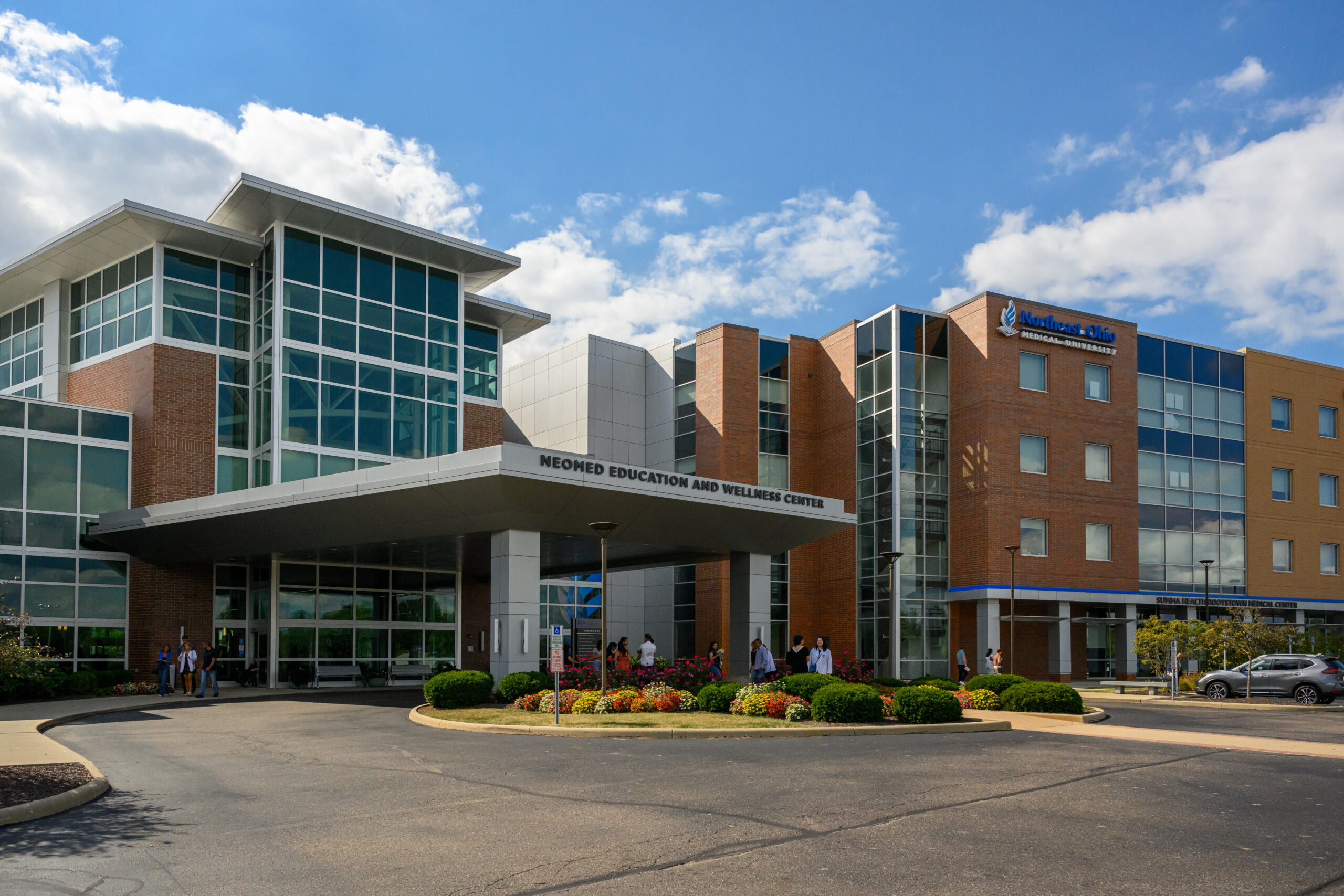
A Conversation With Dr. James Keszenheimer

In this edition of “Conversations with NEOMED,” the University’s Chief Marketing Officer Tonya Strong-Charles interviews James Keszenheimer, Ph.D., who guides the Timken Foundation Medical Design Innovation Center (MEDIC) at NEOMED.
How long have you been at NEOMED, and what drew you to the University?
I’ve just completed our fourth cohort in the innovation program. What really drew me to NEOMED was the vision. When I met with Dr. [John] Langell and heard about the idea of building a master’s program centered on innovation and creating a facility to help researchers prototype devices and move products toward FDA approval, it felt like everything I had done professionally was coming together in one place.
What can you tell us about the Master of Science in Health Innovation and Design program?
The program is evolving. It’s designed for future healthcare providers, scientists, engineers and even business and law students who are interested in innovation in healthcare. The goal is to bring together people from different disciplines who want to solve healthcare challenges through technology and design.
What role does the MEDIC facility play for students and innovators?
The MEDIC gives students, faculty and startups access to prototyping tools and innovation support that can otherwise be difficult or expensive to obtain. We help people develop ideas, create prototypes and think through product development challenges. We’ve already supported internal researchers across NEOMED’s colleges with custom research tools and educational experiences, including 3D-printing coursework for dental students.
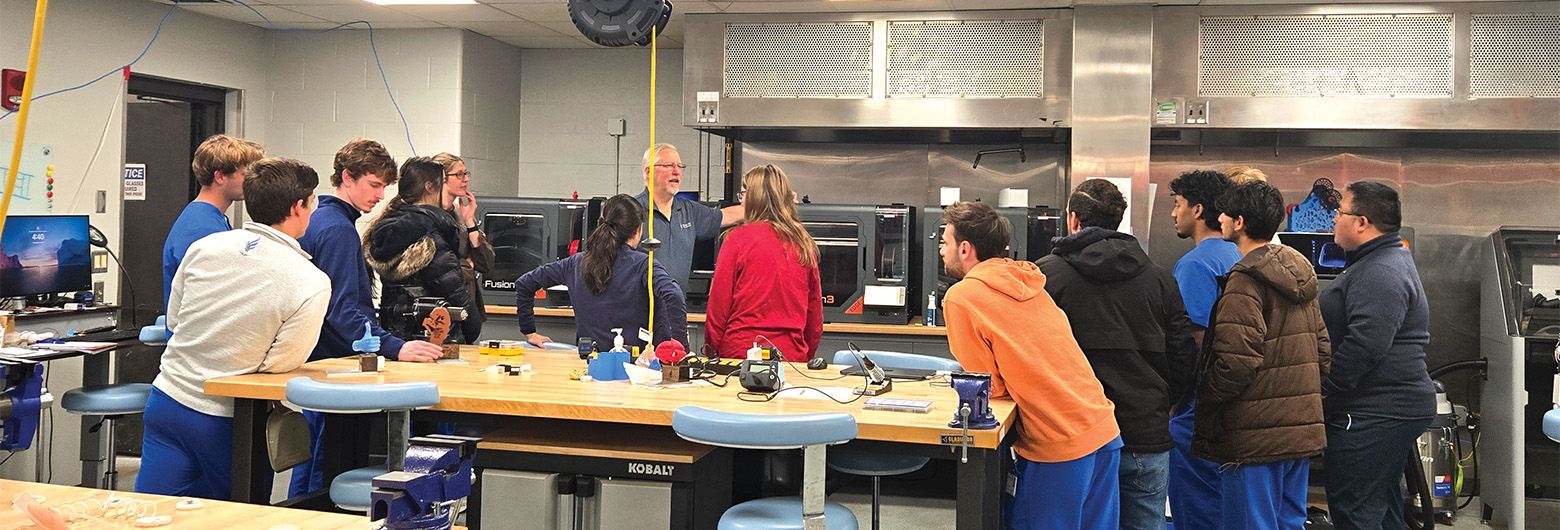
Dr. Keszenheimer gives a tour of the MEDIC space to first-year students in the Bitonte College of Dentistry.
Your background includes startups and technology development. How did that path lead you here?
I’ve spent decades involved in startup companies and helping bring technologies to market, beginning after my Ph.D. work connected to MIT Lincoln Laboratory. Many of those startups involved medical applications. When I was younger, I wanted to be a physician. Although I did not take that path directly, I found another way to contribute to healthcare: developing technologies that help healthcare professionals improve patient care.
What does it mean to return home to Northeast Ohio to do this work?
It means a lot personally and professionally. I grew up on Cleveland’s east side and eventually left Ohio to pursue work in lasers, optics and sensor technology. After years in startups, I wanted to raise my family back in Northeast Ohio and contribute to the growing entrepreneurial ecosystem here. Coming back and helping build something meaningful in healthcare innovation has been incredibly fulfilling.
What’s next for the future of the MEDIC?
One major goal is expanding our anatomical printing capabilities so nearby hospitals can use patient-specific models to help physicians prepare for surgeries and educate patients. We also want to become an ISO-certified facility, which would allow startups developing medical devices to use the testing and development data generated here as part of the FDA process. That certification would be a significant step forward in expanding our impact.