


Health Innovation and Design
The degree is structured around two concentrations, reflecting the complexity of today’s health care environment and how innovation unfolds across both resource-rich and resource-limited settings. Each concentration combines coursework, immersive experiences and an innovation project.

Concentration 1
Global and Underserved Health Systems
This concentration focuses on developing innovative solutions for vulnerable and underserved populations in the U.S. and around the world. Students explore medical devices and digital tools alongside social change, community engagement and public health innovation. The goal is to address health challenges rooted in social, environmental and economic conditions. Graduates are prepared to design solutions that reduce health disparities on a global scale.

Concentration 2
Medical Device Innovation
This concentration centers on designing medical devices that solve real clinical challenges in U.S. healthcare settings while creating entrepreneurial opportunities. Students work with clinicians and engineers to identify gaps in care, then conceptualize, prototype and test new technologies with potential for patents and commercialization. Graduates are prepared to advance healthcare technology and launch startup ventures.
How is the program structured?
The degree follows a three-step plan:
- Common core (18 credits) Build shared knowledge in health systems, innovation, design and research.
- Concentration (12 credits) Complete concentration-specific courses, immersion experiences and electives that match your interests and career goals.
- Demonstrate your work Complete a capstone project and present it in a “shark tank”-style event where clinicians, entrepreneurs and innovators evaluate your solution.
 What will I learn in the core curriculum?
All students complete an 18-credit shared core that builds a foundation in health innovation, design and research. In the core, you will:
- Develop an understanding of healthcare delivery systems and communities in both resource-rich and resource-limited settings
- Evaluate hospitals, health systems and communities to identify biomedical and social innovation opportunities
- Apply human-centered design principles to projects, products, services and systems
- Learn human-centered design for products, services and systems
- Understand the biomedical device innovation pathway
- Study implementation science in health systems
- Build skills in research design, biostatistics and data management
- Practice writing proposals and grants
- Explore the relationships among health, economics and policy
Core courses include:
- Understanding Health Systems: Quality – Value – Cost
- Medical Innovation in Underserved and Global Health
- Bio-Innovation I and II
- Statistical Methodology in Biomedical Sciences
- Capstone
Learn more about the concentrations and curriculum:
What is the Global and Underserved Health Systems concentration?
The Global and Underserved Health Systems concentration is for students interested in population health, global health and working in low-resource or underserved settings in the United States or abroad. You will:
- Study health priorities, policy and disease burden in resource-poor settings
- Explore social, cultural, economic and gender factors that shape health
- Learn frugal innovation and mobile health (m-health) approaches
- Build skills in implementation science and social entrepreneurship
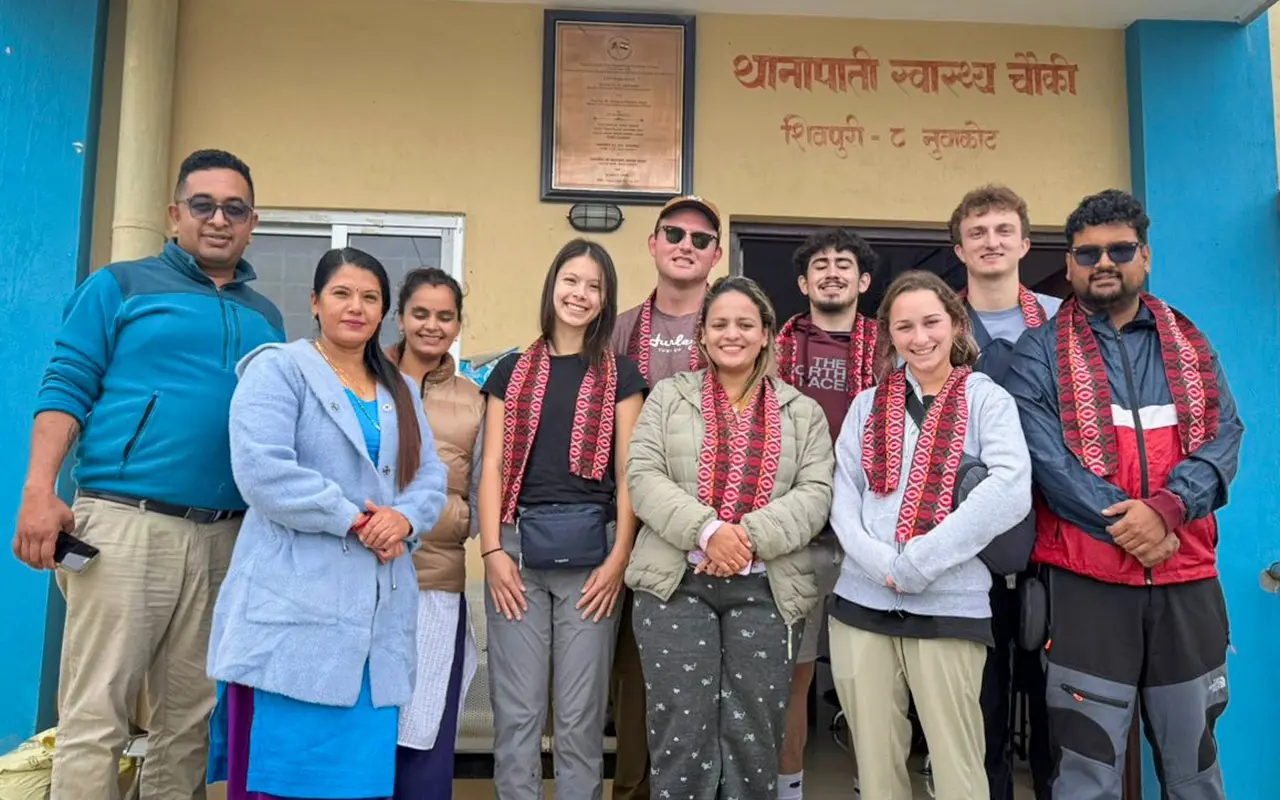
- Complete an immersion experience in a low-resource environment
You’ll work with global collaborators and local leaders to design, implement and evaluate interventions that improve health for vulnerable populations.
What is the Medical Device Innovation concentration?
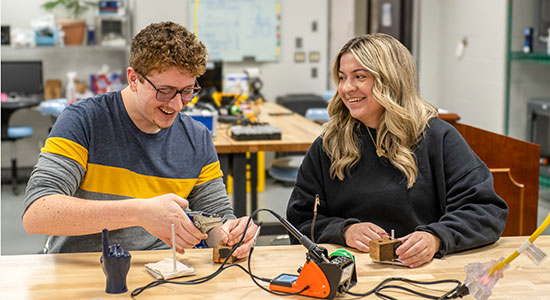
This hands-on concentration is for students who want to design, develop and bring medical devices to market. You will:
- Work in teams with clinicians and faculty mentors
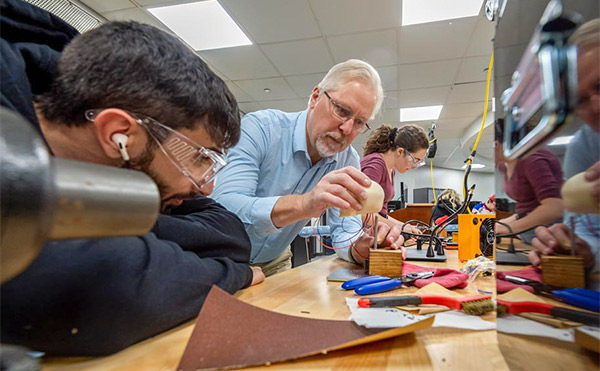
- Learn to use hand tools, machine tools, 3D printers, testers and other process equipment
- Use NEOMED’s Medical Design Innovation Center to conceptualize, design and prototype devices
- Learn regulatory pathways, intellectual property and patent basics
- Study market analysis, value propositions and business planning
- Explore clinical validation, trials and real-world testing
Courses such as Medical Device Prototyping I and II and an Innovation Capstone support the full device development pathway, from need identification through scale-up.
What will I learn?
You’ll learn in an interdisciplinary environment that connects:
- Health sciences, business, engineering and computer science
- Local and global clinical and academic partners
- Faculty, students and innovators from diverse backgrounds
Mentorship is built into the program. You’ll work closely with an educational and mentorship team that helps you tailor the degree to your learning needs and career plans. Along the way, you’ll build teamwork, communication and leadership skills that are essential for innovation.
What skills and competencies will I graduate with? Graduates develop a broad set of practical, in-demand skills, including:
Human centered innovation and design
- Problem framing and gap analysis
- User research and needs assessment
- Conceptual design and iterative prototyping
- Usability and human factors in complex systems
Practical application and validation
- Structured innovation pathways for devices and programs
- Study design, epidemiology and biostatistics
- Quality improvement and implementation science
- Clinical and field evaluation in low-resource or complex settings
Entrepreneurship and systems thinking
- Intellectual property and regulatory basics
- Market analysis, value propositions and business planning
- Health systems analysis and process improvement
- Understanding of cost, value and sustainability in healthcare
By graduation, you will be ready to lead projects that identify inefficiencies in healthcare, optimize care processes and translate evidence into action.
What kinds of projects will I complete?
A major focus of the program is hands-on work in real clinical or community settings. Depending on your interests, your innovation project might involve:
- Medical device innovation
- Health systems management and care delivery
- Digital healthcare and mobile health apps
- Business models and sustainability in low-resource settings
- Education and knowledge-transfer interventions
- Social entrepreneurship to address inequities in health
You’ll generate an idea and hypothesis, design and implement the project, then evaluate its impact with guidance from faculty mentors.
How long will it take to finish the Master of Health Innovation and Design?
You can complete the Master of Health Innovation and Design in one or two years, depending on your schedule and plan of study. All students complete 30 credit hours, including a capstone project.
Program format?
In person.
What can I do with a degree in Master of Health Innovation and Design?
Students in both concentrations are prepared for careers in healthcare across academic, industry and global policy settings. The program supports global career aspirations and allows students to develop an individualized learning plan, guided by faculty mentors, to align coursework with their professional goals.
The Master of Health Innovation and Design prepares you for roles in:
- Health innovation teams in hospitals and health systems
- Medical device and digital health companies
- Public health agencies and global health organizations
- Nonprofits focused on health equity and social impact
- Research centers and academic programs in health innovation
- Startups and social enterprises you help create
- Develop, implement and evaluate innovative medical programs
Graduates are prepared to discover, design and implement innovations that improve quality of life, advance health equity and contribute to economic development in both local and global communities.
Who is the Master of Health Innovation and Design for?
This course is for creative, energetic students with ideas on how to make the world a better place. This immersive and hands-on program is designed for students and professionals from many backgrounds — science, engineering, business, public health, clinical care, policy and more — who want to:
- Lead innovation in healthcare and public health
- Develop innovative health and social solutions for vulnerable populations in low resource environments
- Work on real problems in real settings, not just case studies
- Build skills in design, data, entrepreneurship and implementation
- Create projects that can lead to products, programs or startups
- Create social, medical and environmental change to improve health and wellbeing of societies.
- Become entrepreneurs and leaders for social and medical startups
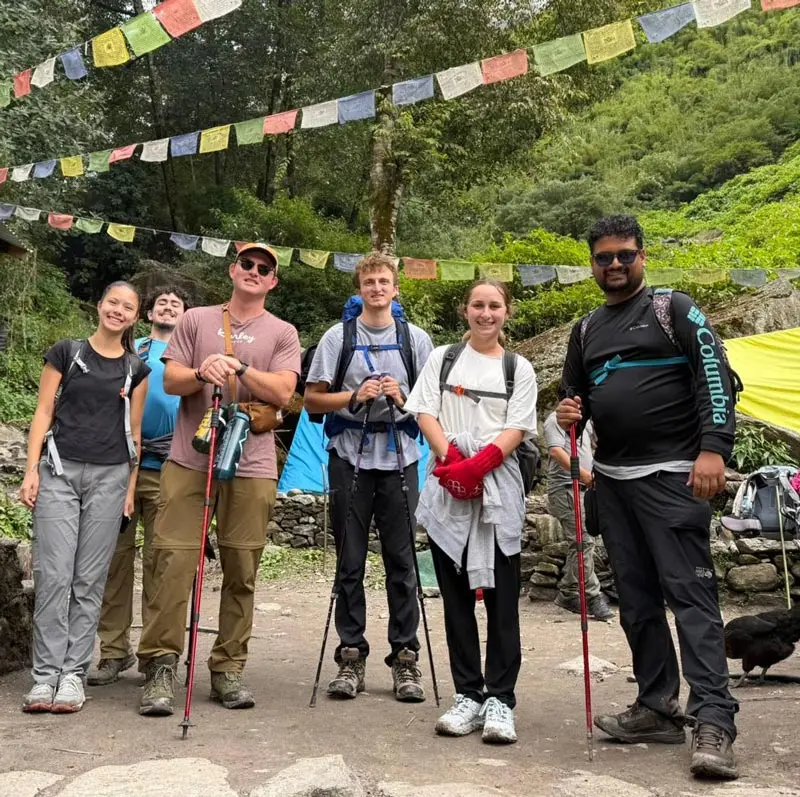
NEOMED students on a trail in Nepal.
Admissions requirements
- A bachelor’s degree (or higher) from an accredited college or university.
- An undergraduate GPA of at least a 3.0.
- Current resume containing contact information, education, employment, scholarly activities and licensure (if applicable).
- Official transcripts from all institutions where you have been enrolled (includes undergraduate and graduate courses).
- WES evaluation for any foreign transcripts.
- A minimum of one recommendation/evaluation from a professor from senior year of education (must be submitted through the application system).
- Provide a personal statement based on the concentration prompt.
- Must be a U.S. citizen or permanent resident to apply.
Apply now
Apply through GradCAS, the Centralized Application Service for graduate programs.
How can I get more information?
Request more information about the degree.
Questions about the admissions process? Write to [email protected]