


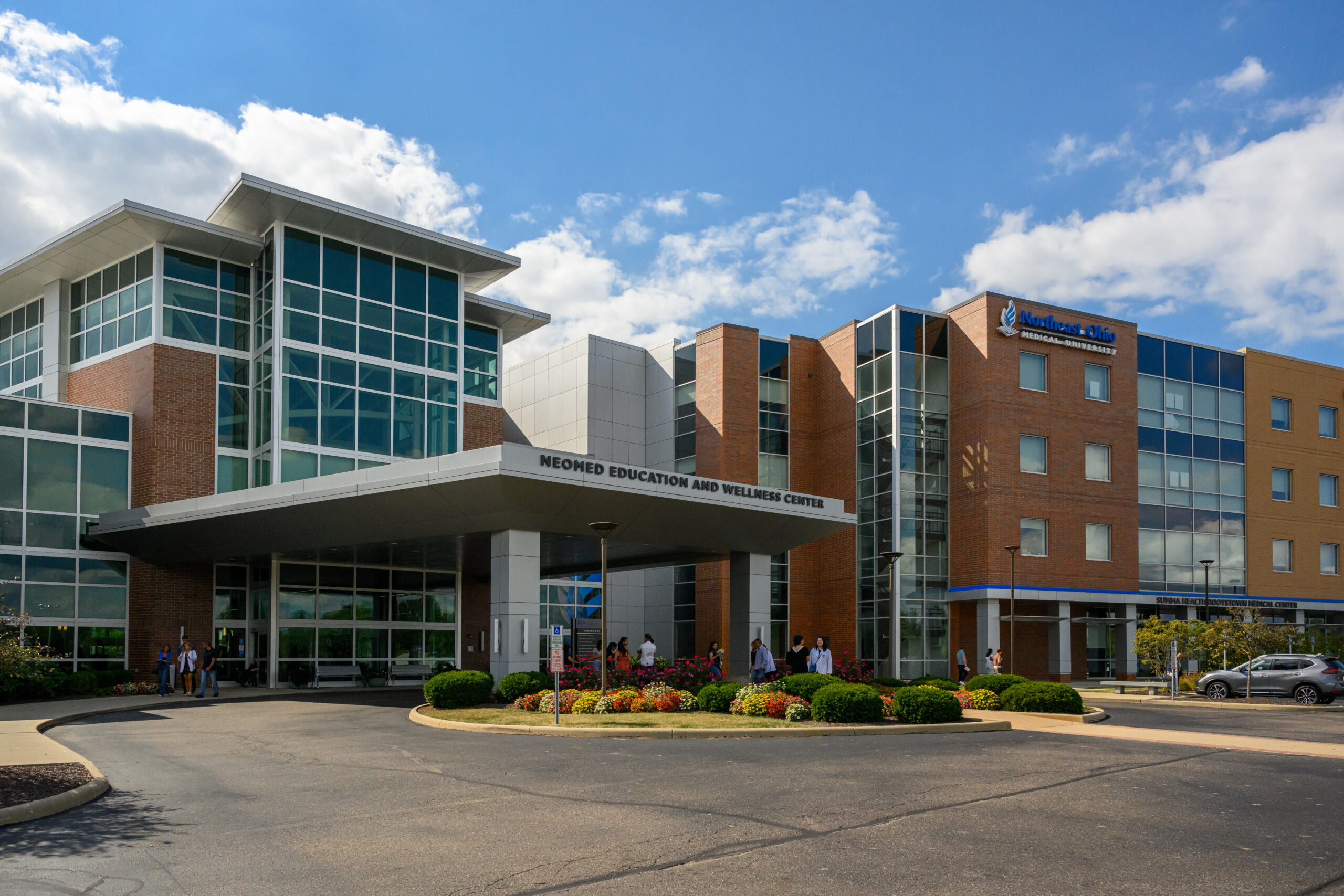
Exposure to Infectious Disease Policy
University Policy
Exposure to Infectious Disease Policy
NORTHEAST OHIO MEDICAL UNIVERSITY
Policy No: 3349-10-50
POLICY TITLE: Exposure to Infectious Disease Policy
EFFECTIVE DATE: October 1, 2018
REVISED: September 1, 2026
RESPONSIBLE DEPARTMENT: Office of Environmental and Occupational Health and Safety, and Office of Academic Affairs and Student Services
All University Personnel
A. Purpose
The purpose of this Policy is to protect employees, volunteers, and students within the Northeast Ohio University (NEOMED) environment against exposure to and transmission of infectious disease; to prevent the inadvertent transmission of infectious disease to patients by ensuring expert, safe patient care; and to provide a safe work environment.
B. Scope
This Policy applies to all students, employees, and volunteers within the University environment or educational experiences at clinical sites.
C. Definitions
- “Carrier” is a person who harbors the micro-organisms causing a particular disease without experiencing signs or symptoms of infection, but who can transmit the disease to others.
- “HBV” is the hepatitis B virus. For reporting purposes, HBV is defined as hepatitis B virus with hepatitis B-antigen positive status.
- “HCV” is the hepatitis C virus.
- “HIV” is the human immunodeficiency virus which attacks the immune system and may cause acquired immune deficiency syndrome (AIDS). The virus is transmitted through sexual contact and exposure to infected bodily fluids and perinatally from mother to baby.
- “Infectious Disease” is any disease that can be transmitted, whether via bodily fluids, direct physical contact, or common handling of an object that has been contaminated by infective micro-organisms through a disease carrier or by infected droplets coughed or exhaled into the air.
- “Risk Sufficient to Exclude” is a significant risk of infection that poses serious consequences for persons within the University environment, and which may only be eliminated or contained by the exclusion of the source of risk from the environment.
- “Student Health and Immunization Committee” is a select group of NEOMED faculty, administrative representatives from each College, and invited external clinicians, one of whom is an infectious disease physician, responsible for advising, recommending, and approving decisions regarding student insurance, student immunizations, and student health issues such as infectious diseases and exposures.
- “University Environment” includes the NEOMED Rootstown campus and NEOMED educational sites.
- “Volunteer” is any person who is working in an “unpaid” status on the NEOMED Rootstown campus. This may include graduate students involved in teaching and/or research in one of the University’s research laboratories.
- “Volunteer Setting” is the normally assigned setting where volunteer work is to be performed.
D. Policy statement
- Students
- Admissions
- Applicants to NEOMED academic programs will not be denied admission to the University solely because they are carriers of or have an infectious disease.
- Applicants to NEOMED programs who have injuries or illnesses which make it unlikely they will be able to complete the curriculum or engage in the active practice of their chosen profession are encouraged to examine their motives for entering such professional education.
- Admitted Students who contract an infectious disease during their course of study, and who pose a Risk Sufficient to Exclude them from the educational setting, could experience a delay in matriculation or graduation.
- Matriculation
All Students are required to be knowledgeable of, and practice, universal infection control precautions. Students are required to be fully compliant with NEOMED’s immunization requirements by the stated deadline. Students who do not comply with immunization requirements may not be permitted to matriculate until those requirements have been met and documented and may not be able to continue in the program if these requirements lapse during enrollment. - Exclusion from the Educational Setting
- The University may remove students from active participation in a program if they become carriers of, or contract, an illness until such time that the risk has been eliminated or sufficiently mitigated.
- Students who are continually or severely ill or incapacitated as a result of infectious disease exposure while enrolled at the University will be counseled as to the difficulty of successfully completing the curriculum and may be placed on a medical leave of absence until their illness is no longer an impediment to their studies and documented proof of ability to return to the curriculum is provided.
- Implementation Procedures
Procedures for implementing sections of this Policy that are applicable to Students shall be established consistent with state and federal law. The Student Health and Immunization Committee will make specific, case-by-case recommendations to determine the status and educational privileges of Students who contract an infectious disease prior to or during their course of study. - Infectious Disease Procedure Related to Continued Student Participation in Educational Activities
All Colleges within the University voluntarily comply with the spirit and intent of all infectious disease regulations passed by the Ohio State Medical Board (OSMB). Such voluntary compliance is consistent with our students’ education and the needs of their future careers. The Colleges have adopted the following procedures to minimize the risk of infectious disease transmission, including HBV, HCV, and HIV transmission, from students to the public. These procedures are as follows:- A student who believes, or has reason to believe, that he/she is infected with HBV, HCV, HIV, or any other infectious disease (e.g., tuberculosis, meningitis, pertussis) that could pose a risk to patients, students, or teachers, should report that belief to the Dean of Students, Academic Affairs and Student Services, or their designee.
- The Dean of Students, Academic Affairs and Student Services, or their designee, will require written confirmation from a qualified physician as to the student’s diagnosis. If no infection has occurred, the student’s educational activities may continue.
- If the student is identified as having an infectious disease that poses a risk to patients, students, or teachers, the Dean of Students, Academic Affairs and Student Services, or their designee, will convene the Student Health and Immunization Committee including, if possible, the student’s health care provider. The committee will evaluate the student’s coursework and patient contact to determine appropriate clinical curricular changes in accordance with guidelines from the Ohio Department of Health (ODH) and the Centers for Disease Control and Prevention (CDC). The committee shall report any recommendations to the Dean of Students, Academic Affairs and Student Services, or their designee, who will then notify the student, course directors, and clerkship directors or experiential site directors of any requirements and/or limitations placed on the student’s educational or clinical activity, including whether a leave of absence may be necessary.
- All information regarding the HBV, HCV and/or HIV status of a student shall be held in strict confidence.
- Failure by a student to comply with this procedure shall be considered a serious breach of professionalism. As a result, the student may be referred to the Committee on Academic and Professional Progress for review.
- Admissions
- Employees
- Employment
Applicants will not be denied employment or faculty status at the University, nor discriminated against solely because they are a carrier of, or have, an infectious disease. - Exclusion from the Workplace
Employees will be subject to exclusion from the workplace if they become a carrier or develop an infectious disease that poses a Risk Sufficient to Exclude. If the University environment poses a threat to the health of the infected person, the University reserves the right to exclude the individual from any area which would increase the likelihood of health problems. If the University determines that the individual must be excluded from the workplace, that person shall have full use of accumulated sick days and/or personal illness leave. - Implementation Procedures
Procedures for implementation of this section shall be established by the Occupational Health and Safety Program in consultation with the Medical Director and shall be consistent with state and federal law.
- Employment
- Volunteers
- Volunteer Setting
Volunteers will not be denied access to the University environment, nor discriminated against, solely because they are a carrier of, or have, an infectious disease. - Exclusion from the Volunteer Setting
Volunteers will be subject to exclusion if they become a carrier or develop an infectious disease that poses a risk sufficient to warrant exclusion. If the University environment poses a threat to the health of the infected person, the University reserves the right to exclude the individual from any area which would increase the likelihood of health problems. - Implementation Procedures
Procedures for implementation of this section shall be established by the Occupational Health and Safety Program in consultation with the Medical Director and shall be consistent with state and federal law.
- Volunteer Setting
- Clearance to Return to the University
- Medical Clearance
It shall be the responsibility of treating health care providers to evaluate students, employees, and/or volunteers who have been exposed to Infectious Disease and to provide written clearance for their return to the University when they no longer pose a risk to the health of others. - Academic Clearance
If the documented Infectious Disease results in an extended absence from student learning activities, the Student Health and Insurance Committee shall refer students to their respective College for academic clearance. Authorization to return to the curriculum following an extended absence is provided by the following:- College of Graduate Studies – Vice Dean;
- College of Medicine – Senior Associate Dean, Academic Affairs;
- College of Pharmacy – Senior Associate Dean, Education; and
College of Dentistry – Associate Dean for Clinical Affairs.
- Medical Clearance
- Clearance to Return to the University
- Medical Clearance. It shall be the responsibility of treating health care providers to evaluate students, employees, and/or volunteers who have been exposed to an Infectious Disease and to provide written clearance for their return to the University at such time when they no longer pose a risk to the health of others.
- Academic Clearance. If the documented Infectious Disease results in an extended absence from student learning activities, the Student Health and Insurance Committee shall refer students to their respective College for academic clearance. Authorization to return to the curriculum following an extended absence is provided by the following:
- College of Graduate Studies – Vice Dean;
- College of Medicine – Senior Associate Dean, Academic Affairs;
- College of Pharmacy – Senior Associate Dean, Education; and
- College of Dentistry – Associate Dean for Clinical Affairs.