


Equipment
Equipment
Comparative Biomechanics Laboratory
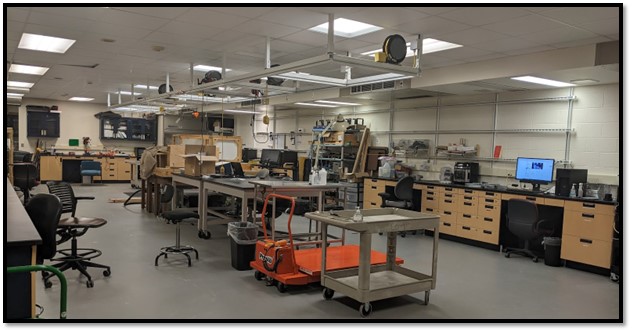
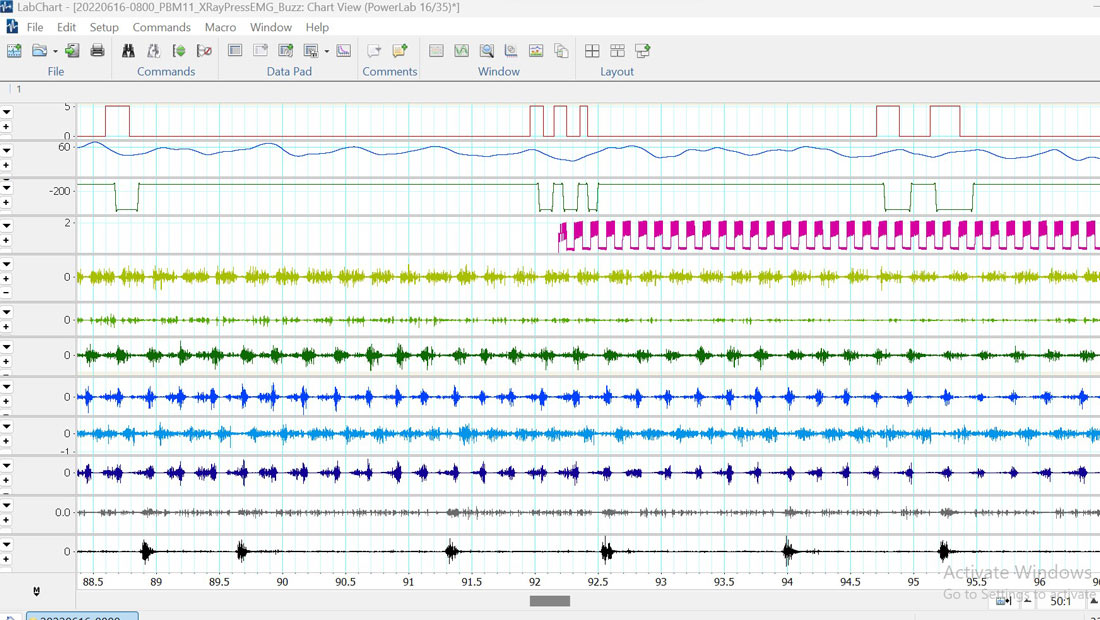
Multiple runways and small-animal treadmills are available for investigating gait mechanics. Laboratory equipment includes high-speed cameras, commercial and custom-built force transducers, and multiple systems for establishing musculoskeletal function and performance in vivo, including electromyography, sonomicrometry, and strain gages.
Equipment for field-based investigation of locomotor function includes multiple GoPro cameras, rangefinders and other devices for remote measurements, and a custom-built transducer system for measuring branch compliance.
Desk space and workstations allow for data processing and analysis within the lab.
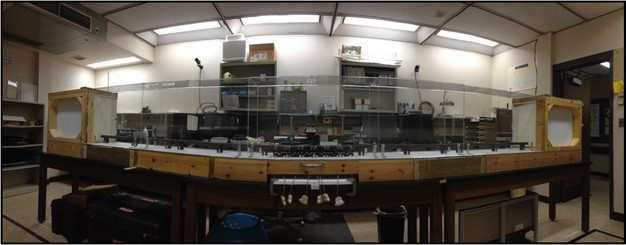
Next to the main lab is an XROMM facility, including two C-arm fluoroscopes retrofitted with high-speed digital cameras for 3D-calibrated high-speed cineradiography with possible synchronized EMG.

This comparative laboratory also includes an Instron materials testing machine and a microindenter for testing material properties.

The comparative biomechanics lab has several pieces of equipment that facilitate fabrication of mechanical and electronic devices for experimentation.
Soldering Station:
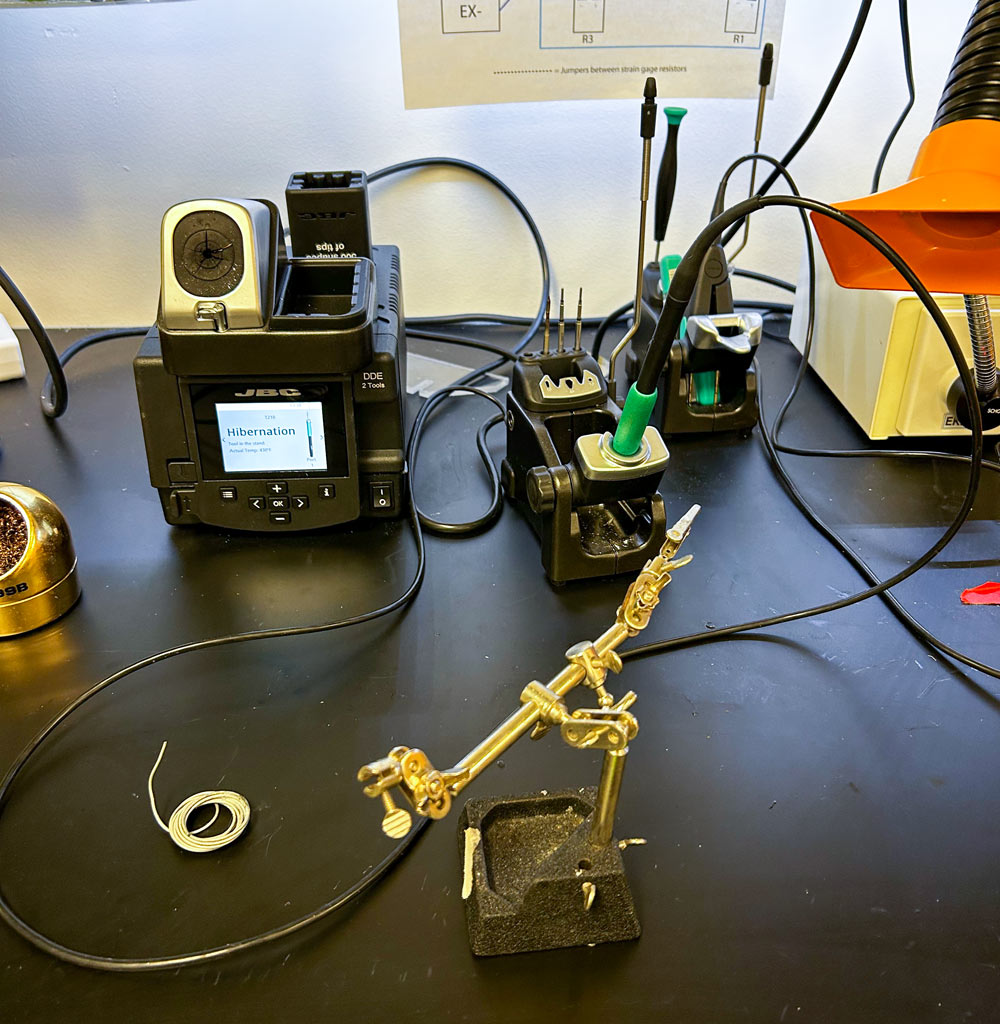
The JBC DDE 2-tool soldering station has interchangeable tips and is capable of hand soldering small components such as electrode wires or surface mount electronic components. The handset automatically enters hibernation mode when placed in the cradle for added safety
3D Printers
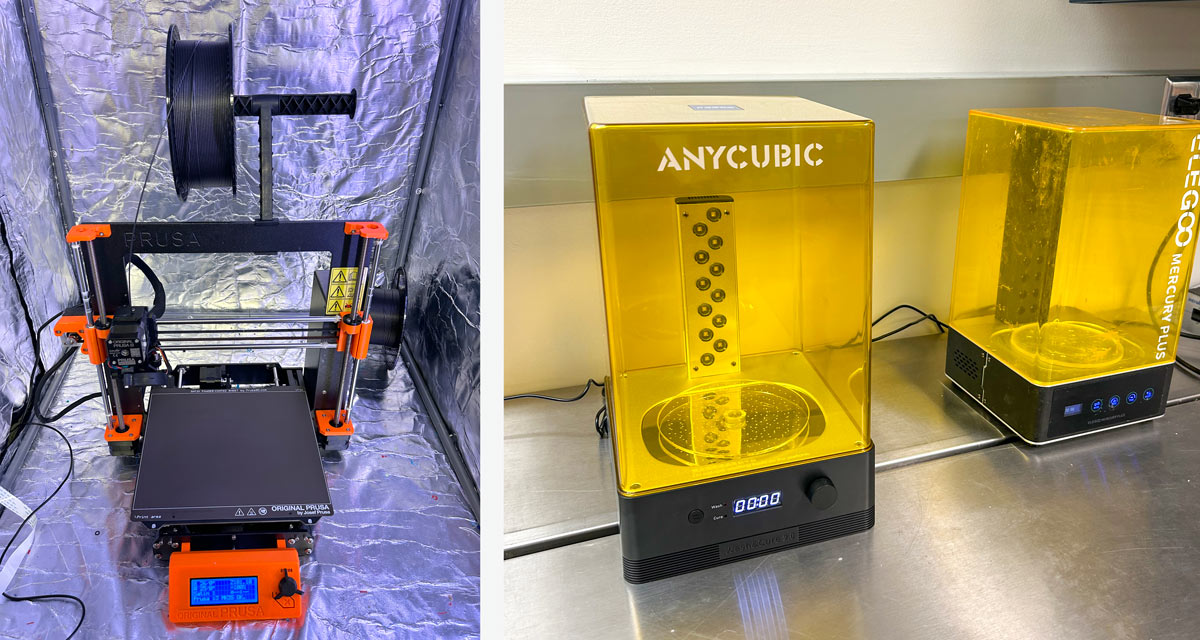
Prusa Mk3 S+ with Revo Hotend (above left)
The prusa Mk3S+ is an FDM-style printer that extrudes plastic filament in successive layers to build a three-dimensional object. This printer can print most types of plastic, the most popular being PLA. The printer sits in an enclosure allowing it to print other engineering grade plastics like ABS as well. The Prusa is fitted with an E3D Revo hotend which allows for simple nozzle changes to set up the printer for detail or fast printing.
Anycubic Photon Mono X (above right)
The Anycubic photon mono X is a resin style 3D printer that builds parts by curing layers of liquid resin. This style of printer is best suited for making detailed parts with small features, though those parts tend to be more brittle than those printed by FDM-style printers.
Silicon Casting
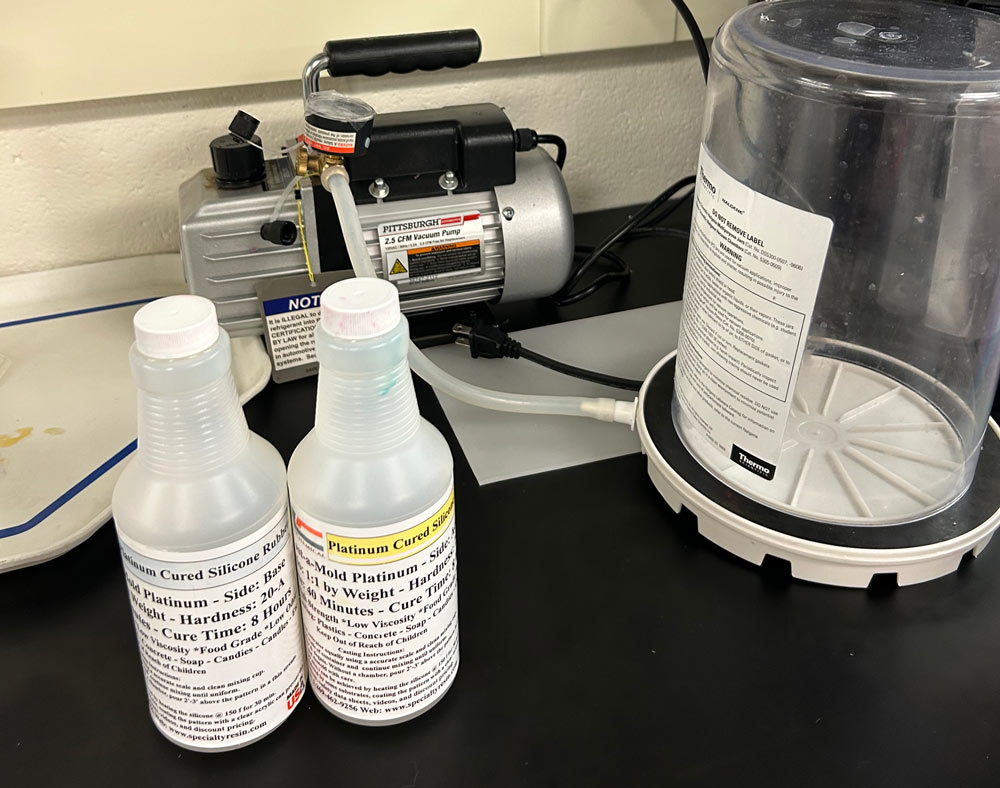
The Lab has equipment to mix and cast silicone parts. These parts can be cast using 3D printed molds. The lab also has scales and vacuum chambers to mix and degass the silicone for casting.
Miscellaneous tools
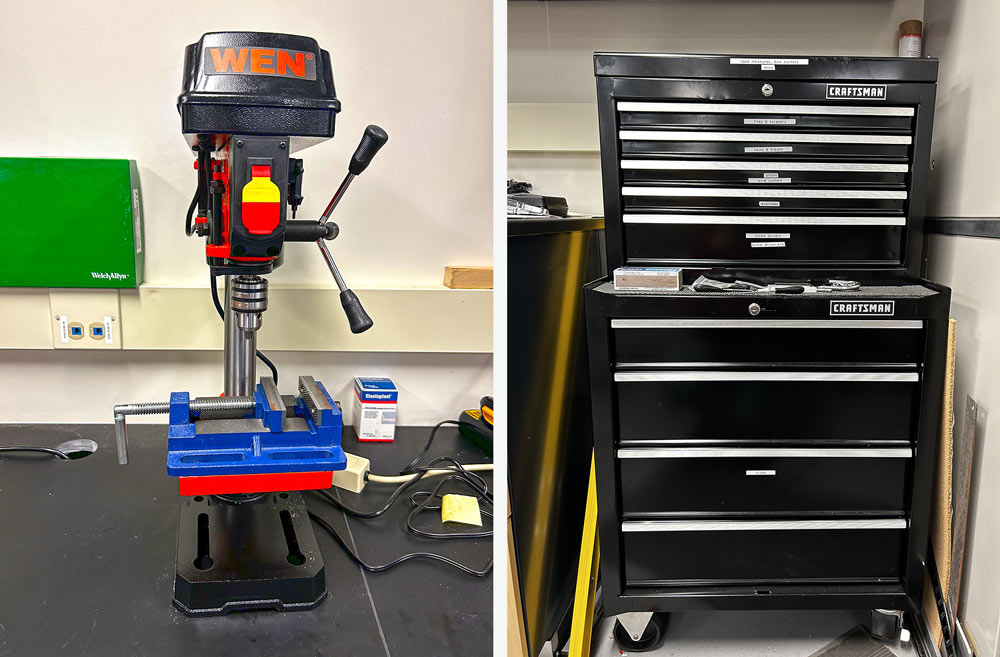
The Lab maintains a collection of hand and power tools to do general fabrication including a drill, saws, files, screwdrivers, tap and die set and a drill press.
Histology Laboratories
Histology Laboratories
Hard Tissue Histology
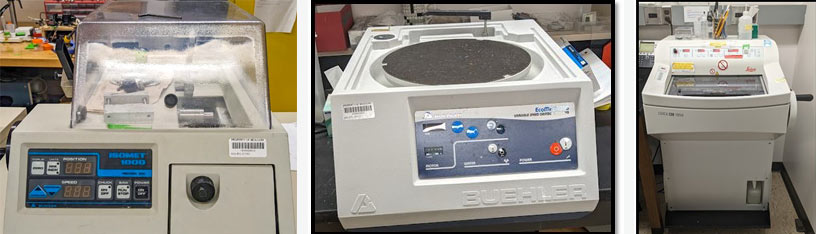
The hard tissue laboratory facilitates plastic and epoxy-embedded specimens. Specimens are prepared via a diamond saw or tungsten-carbide knife and a grinder-polisher with magnetically attached diamond abrasive disks. Associated imaging components include a polarizing light microscope fitted for plain and cross-polarized and circular-polarized light, a microscope, and a digital camera.
Soft Tissue Histology
The soft tissue laboratory includes an ultramicrotome, cryotome, and an automated tissue processor for soft or decalcified tissues. A paraffin embedding machine and tissue flotation baths are included. Several workstations allow for immunohistochemistry and standard staining procedures.
Micro-CT Scanner
The imaging facilities include a high-resolution micro-CT scanner with 7-micron slice resolution and density calculation capabilities. Associated workstations provide image analysis software, including Avizo and Amira.
Electron Microscope
The Department of Anatomy and Neurobiology operates a transmission electron microscope with a side-mount digital camera.