

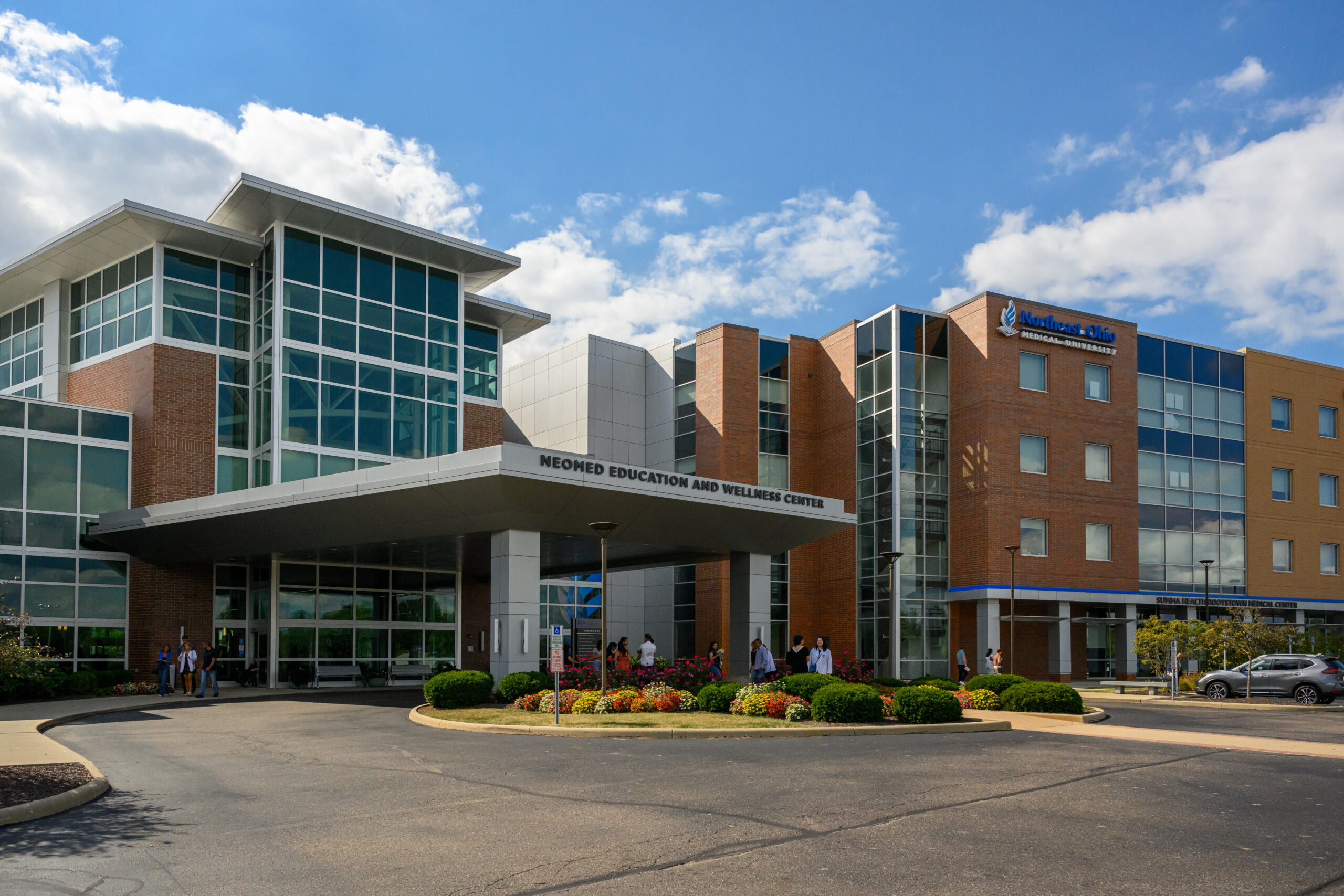
NEOMED is ideally positioned to lead in the responsible use of AI.

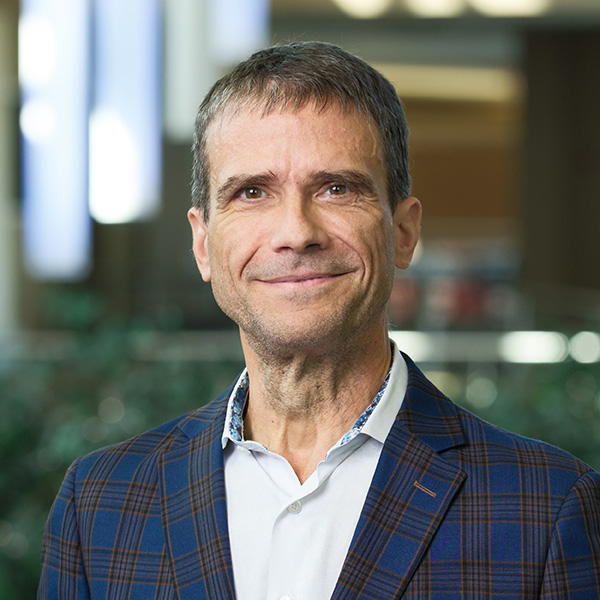

The use of data science and artificial intelligence (AI) in healthcare is becoming more and more prevalent. From developing workflows to diagnostics, from genetic research to mundane but vital tasks, these tools are becoming deeply ingrained in medicine and other health professions. Despite that, many clinicians lack training in their use.
Northeast Ohio Medical University is trying to change that.
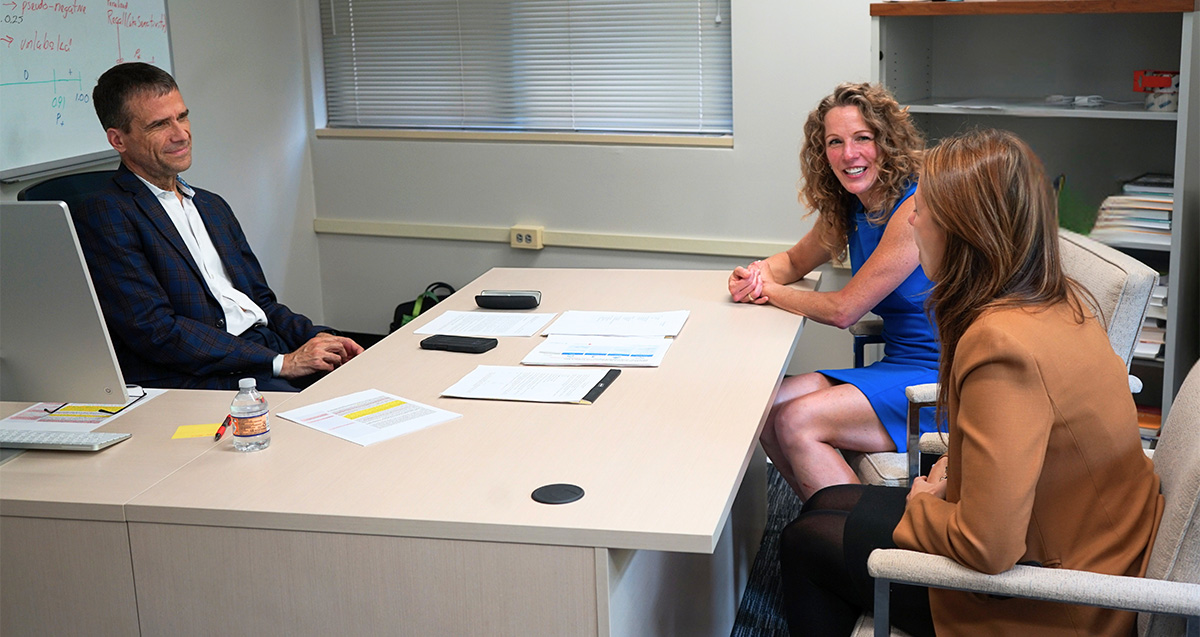
Philip Turk, Ph.D. (left) consults with CTRI colleagues.
“NEOMED is ideally positioned to lead in the responsible use of AI,” asserted Philip Turk, Ph.D., founding director of the Clinical and Translational Research Institute (CTRI) at NEOMED. Dr. Turk has been instrumental in expanding the University’s capabilities in data science and AI. That includes CTRI as well as a new master’s degree in health data science and AI and a collaborative center with University Hospitals, the Center for Artificial Intelligence and Digital Experience (AIDE).
Applying data science to healthcare first requires understanding what it is.
In simple terms, “data science blends statistical theory and mathematics with analytical and computer skills to solve problems involving data,” said Dr. Turk. With exceptionally large and complex data sets, such as those compiled through electronic health records or the human genome, data science enables quantitative and analytic approaches that would have been too time-consuming and impractical to attempt manually or with analytic tools available in the past.
Dalia Sulieman, Ph.D., associate professor of computer science in the NEOMED College of Graduate Studies, stressed the growing importance of understanding data science for health professionals.
“When I see students who are studying at medical school or doing nursing, the first thing I tell them is go and take electives in statistics, take some electives in programming,” she said. “Because if they are doing any research, if they are just studying, doing extra things, they will need statistics. They will need AI. Now it’s everywhere and it has great potential in the medical field.”
NEOMED is ideally positioned to lead in the responsible use of AI.
Dr. Turk shared some examples of ways in which data science and artificial intelligence have made great strides in the area of medicine.
“One that comes immediately to mind would be to develop useful models,” said Dr. Turk. “For example, one might be interested in knowing if a person is or is not likely to have some sort of disease. These are what are known as classifiers. And classifiers have the ability to take different characteristics or variables about the people and give you the ability to predict whether they do or do not have a particular type of disease.”
He also shared a use case of using an AI neural network to read huge amounts of x-rays or different types of images, and ascertain whether someone, for example, might have cancer.
“When this first took flight, the initial attempts of these artificial intelligence tools to determine if someone likely had cancer or not based on a CT scan or an MRI, were fairly crude, but now they’re just getting amazingly good to the point where they’re at, or even sometimes exceeding, the ability of the radiologist to make that determination,” said Dr. Turk.
Dr. Sulieman also noted the value of AI tools in analyzing large data sets. “They can read a huge amount of data, and try to investigate the hidden patterns inside this data. These patterns can explain a lot,” she said.
 The Clinical and Translational Research Institute (CTRI) at NEOMED provides resources for quantitative research through data, design and education.
“A primary goal of CTRI is to help researchers conduct their research from bench to bedside and beyond,” said Philip Turk, Ph.D., program director. “The services we provide can help them do that.”
Designing clinical and pre-clinical research studies can be complicated. From the determination of the optimal study design, to identifying workflows and integration into care pathways, to facilitating community engagement, to ensuring ethical compliance and regulatory oversight, there are many important decisions to make. CTRI helps support those activities, aiding each of these components to ensure a timely start, successful implementation and robust results.
CTRI also collaborates with partners in the community to improve the health of Northeast Ohio and beyond.
For instance, Dr. Turk, along with CTRI colleagues Jennifer Reneker, Ph.D., and Lyn Haselton, Ph.D., received a grant from the Clinical and Translational Science Collaborative of Northern Ohio to study healthcare delivery in several rural Ohio counties. Titled “Listening to Rural Voices,” the project will apply artificial intelligence, specifically natural language processing, to patient narratives to extract meaning and identify needs and barriers. The initial project includes Ashtabula, Huron, Knox, Morrow and Tuscarawas counties in Northeast Ohio.
Lesley Chapman Hannah, Ph.D., assistant professor of translational biomedical science in the NEOMED College of Graduate Studies, joined the University to serve as faculty of the new data science master’s degree. She has worked extensively with omics data related to cancer risk in pediatric and adult populations. She is excited about the uses of data science in research.
“Data science techniques enable researchers to integrate various data sources into a unified framework,” she noted. “In clinical trials, for instance, these multimodal approaches allow you to reveal meaningful patterns across different data sources—clinical, laboratory, imaging data. And then you can use other data science approaches to look for key trends within your newly merged datasets to see whether or not they support or refute a hypothesis of interest.”
She noted that some datasets like genomic or RNA-based datasets may include thousands of features representing thousands of genes or thousands of variants.
“Each patient in a dataset may have multiple types of associated data. For example, you might want to combine clinical data with patient-specific outcomes, such as a biomarker measurement or a response to a particular drug. In that case, the clinical dataset can be merged with an omics dataset. Multimodal data analysis provides a framework for integrating these high-dimensional data sources and identifying meaningful patterns and trends that may not be apparent when analyzing each dataset independently,” said Dr. Chapman Hannah.
The Center for Artificial Intelligence and Digital Experience (AIDE) is a collaboration between NEOMED and University Hospitals.
AIDE is focused on developing human-centered AI applications that can be tested and incubated in Cleveland’s MidTown Health Tech Corridor. The center will translate innovation into real-world clinical, operational, educational and research impact.
“Ultimately, the Center for AIDE will advance human-centered AI to improve patient care,” said Philip Turk, Ph.D., program director of NEOMED’s Clinical and Translational Research Institute and NEOMED lead on the AIDE project.
AIDE will help NEOMED and UH strengthen organizational, workforce and technology capabilities to accelerate discovery, learning and scaling. That will help innovations move through development from bench to bedside more quickly and efficiently.
The center is scheduled to begin its work in Fall 2026.
Some uses of AI in healthcare are less exciting but are nevertheless important as they free up time for physicians and other health professionals to practice at the top of their license. For instance, AI can be used to off-load tedious and time-consuming tasks or respond to frequently asked questions in MyChart.
“Docs can be inundated with MyChart messages and spend a full day just responding to and catching up on messages,” noted Dr. Turk.
The healthcare sector is facing increasing pressure to improve health outcomes, reduce costs and adapt to emerging technologies. At the same time, health professionals are required to manage massive volumes of patient data, but many are not trained to harness data and AI to drive innovation.
The Master of Science in Health Data Science and AI program at NEOMED empowers clinicians, researchers and aspiring data scientists to improve health outcomes through analytics and innovation. The curriculum blends advanced coursework with hands-on learning in collaboration with a top health system and research institutes.
“Graduates of this program will have a well-stocked toolkit for applying data science in healthcare,” said Philip Turk, Ph.D., program director.
Included in that toolkit are advanced skills in data science, machine/deep learning and health analytics.
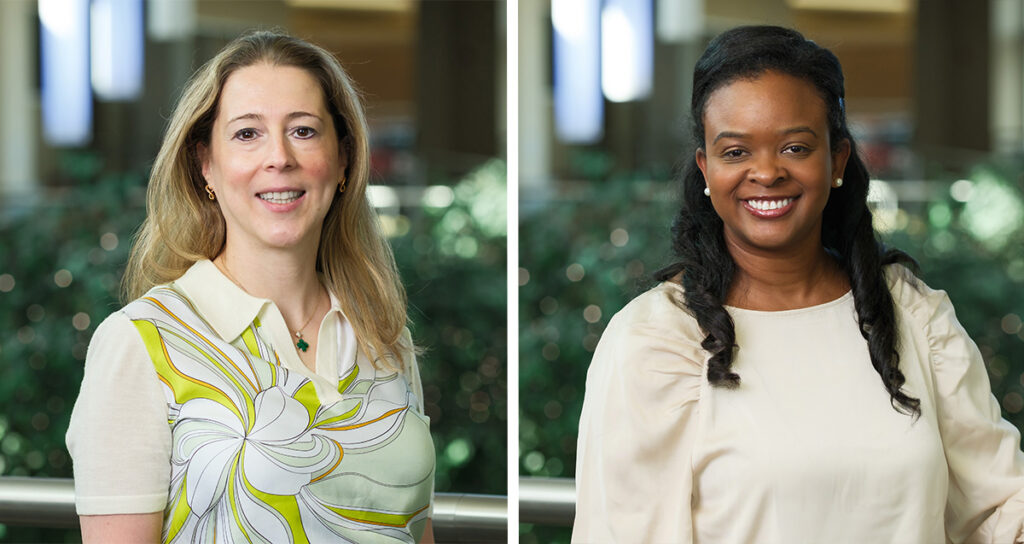
In her statistical computing course, Dalia Sulieman, Ph.D. (pictured left), associate professor of computer science, will teach basic programming skills but stressed that students will not need a background in computer science to succeed. “I’m not expecting them to be software engineers or perfect A+ coders. I will be teaching them how to read the code, understand it, and how to use AI to generate this code to design AI systems for healthcare,” she said.
Lesley Chapman Hannah, Ph.D. (pictured right), assistant professor of translational biomedical science, will teach courses in data visualization, statistical methodology for biomedical sciences and data analysis of electronic health records.
“Conceptually, I hope students will develop a solid understanding of how data science and artificial intelligence can be applied to address challenges within healthcare,” she said. “The integration of the two sectors [data science and healthcare] is very much an emerging field. We’re all immersed in data and interact with artificial intelligence in one way or another. Despite the widespread adoption of artificial intelligence across many sectors, fields such as healthcare still present significant opportunities for deeper integration of data science and AI. These tools can support the development of innovative solutions, expedite decision-making, and enhance the efficiency of daily healthcare operations,” she said.
Dr. Sulieman also noted the importance of discussing ethical considerations and the human aspects of the use of AI in healthcare. “The brain is still in the doctor,” she said. “These models are not a replacement of the human. Critical thinking is still very important. We need to make sure that the human is in this process, not the machine. The machine is a tool that is going to help us to understand this huge amount of data.”