


Alexandra Jakubow, a first-year student in the College of Medicine, contributed the following article as one of the educational initiatives sponsored by the NEOMED’s Student Wellness Committee as part of their peer-support series on the eight dimensions of wellness. The eight dimensions that this student-and-staff committee supports are emotional, environmental, financial, intellectual, occupational, physical, social and spiritual wellness.
The concept of eight dimensions of wellness comes from the Substance Abuse and Mental Health Services Administration (SAMHSA), a U.S. government agency.
What do Novak Djokovic, Lewis Hamilton, Patrik Baboumian and Venus Williams all have in common besides being the top athletes in their respective sports? They are all on a Whole Foods Plant Based (WFPB) diet. This year will mark three years since I turned to a WFPB diet. Like many, I had been eating the standard American diet. A diet that has been proven time after time to lead to significant health problems like Type 2 diabetes, heart disease, cancer and mental health issues. After watching my grandfather die of a heart attack at an early age and my grandmother die after being diagnosed with her third type of cancer, I knew that I needed to take my health and well-being into account over everything else.
Enter the WFPB diet.
Not only did this diet give me mental clarity but also substantiality helped me in the gym. Many people ask ‘where do you get your protein?’ because to them the only sources of protein are meat, fish, eggs and dairy. But that’s not true. A WFPB diet is rich in protein, fiber, vitamins and minerals. Some of the most common sources of protein on a WFPB diet are tofu, seitan, spirulina, broccoli, lentils, chickpeas, hemp seeds, oats and quinoa. As I got more comfortable with the diet, my plates of food started becoming more and more colorful.
This way of life has introduced me to foods that I had never even heard of before and different doctors around America who advocate for their patients by prescribing this diet. Caldwell Esselstyn, M.D., is a board-certified surgeon who championed the famous cardiovascular prevention and reversal program at The Cleveland Clinic Wellness Institute, The Esselstyn Heart Disease Program. He has published over 150 scientific articles including one of the longest longitudinal studies researching arresting and reversing coronary artery disease in severely ill patients. Michael Greger, M.D., is a general practitioner specializing in clinical nutrition who has published numerous books and videos on why a WFPB diet is the way to live. In one of his most popular videos, titled Why All Athletes Should Eat Plant-Based Diets, he explains why many athletes have a higher prevalence of atherosclerosis and heart muscle damage compared with sedentary individuals. But through WFPB diets, athletes can improve their performance and accelerate their recovery while reversing heart disease.
Dean Ornish, M.D., is an internal medicine doctor who conducts research at the Preventive Medicine Research Institute in collaboration with the University of California. He created a scientifically backed program to reverse heart disease and other chronic conditions that Medicare is now covering. Dr. Greger and Dr. Ornish are featured on the Podcast The Exam Room where they talk about the science behind a WFPB diet. Neal Barnard, M.D., created the podcast in conjunction with the Physicians Committee for Responsible Medicine. This committee researches ways that doctors can treat chronic diseases by putting prevention over pills and their patients at the center of controlling their health through a WFPB diet.
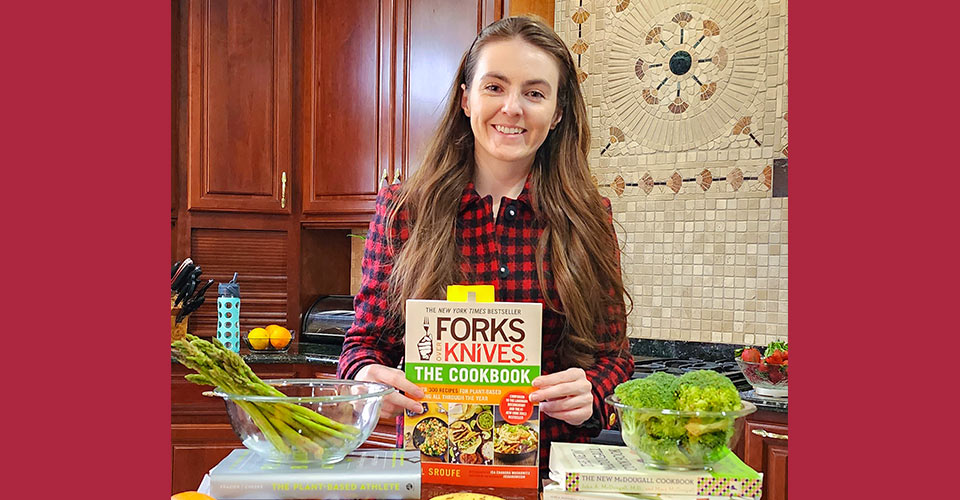
Through the WFPB diet I am no longer scared of eating, and cooking has become a relaxing and enjoyable part of my day. Some of my favorite recipes come from the website Forks Over Knives.
Like most medical school students, I don’t have a lot of time on my hands to cook meals, so these two articles come in handy: 40 Quick and Healthy 30-Minute Meals and 25 Healthy Vegan Meals You Can Make in 20 Minutes or Less!
Here are some of my favorite recipes from the lists:
- Mango and Black Bean Tacos
- Rice Vermicelli Bowls with Bok Choy and Adzuki Beans
- Red Lentil Rotini with Silken Leeks and Shiitakes
- Creamy One-Pot Pasta with Broccolini
- Veggie Summer Rolls– I’ll add mango and tofu sometimes
- Jackfruit Barbecue Sandwiches with Broccoli Slaw
Anybody can be healthy! It just takes knowledge and willpower!